
Some workdays are packed; others end early. Even a pleasant skincare routine can start to feel like another appointment. A small daily routine keeps the steps that matter to you manageable, without asking you to make fresh decisions every morning.
Extras fit on quieter days. A flexible weekly plan also leaves room for overtime and rest, instead of filling every free hour.
What stays in your routine every day, even on a busy workday?

Your daily beauty routine doesn't have to look the same every morning. On busy days, a small routine that's personal to you is often easier to keep up than a long list. What belongs in it depends on your preferences and daily schedule—not on other people's expectations.
Habits take time too. If a step no longer feels worthwhile to you, it doesn't have to stay in your routine just because it's familiar. Keeping products within reach and deciding the night before can also mean less searching and second-guessing in the morning.
Checklist for your daily basics:
- Which care steps matter to me even on busy days? - What tends to stay on my list out of habit or because of other people's expectations? - Are the products I use within reach, so I don't have to search for long? - What would I rather decide the night before than in the morning? - Is there a shorter version for days when my work schedule changes? - Does this baseline fit into my day without me having to get up earlier?
A shorter version isn't an incomplete routine. It shows what remains realistic with less time. Everything else can find a place on another day of the week.
Which extras fit into the week—and what if something gets skipped?
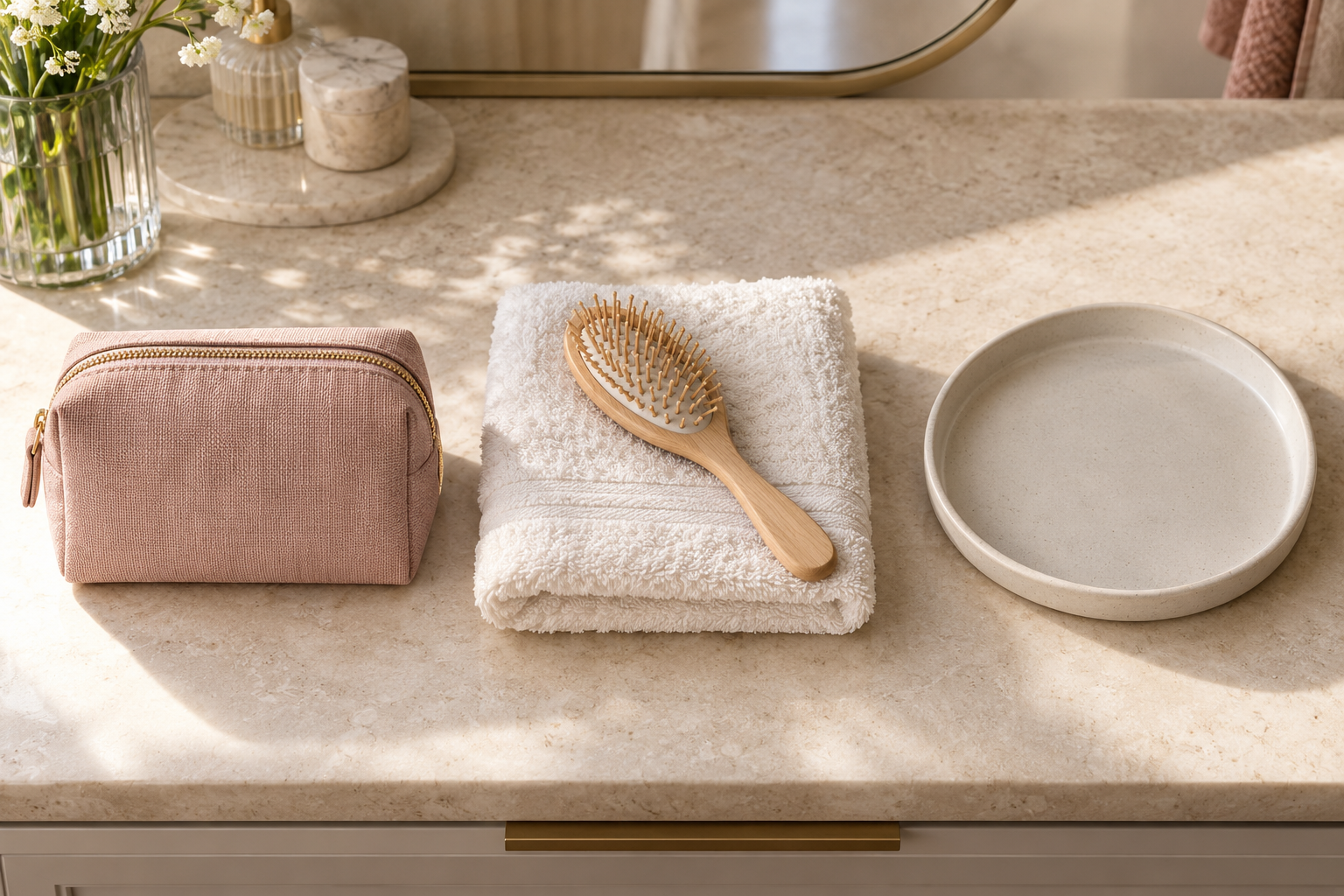
Hair, nail and body care can be added to the daily basics as extras. An extra is an option, not a requirement. How much fits into your week depends on your working hours, personal commitments and preferences.
Five questions for your weekly plan:
1. What would you like to plan this week? Only extras you want need a place. A longer list won't make the week fit better. 2. What can be grouped together? Hair and body care, for example, can go together on a quieter evening. That leaves other days free. 3. Where is there actually time? With changing work hours, the quieter time window can fall on a different day each week. 4. What about overtime? An extra that falls through can be moved to a later time or dropped altogether. Automatically making it up only shifts the pressure. 5. When are the basics enough? On busy days, they can be the whole beauty plan.
A free time slot has a purpose too: it leaves room for changes and rest. The plan shows what's possible instead of filling every free hour.
For a relaxed beauty week, the calendar doesn't have to be packed from end to end. The daily basics give you a guide; extras can be postponed or dropped. Free time isn't a planning mistake. It belongs in a daily life that also needs room for rest. After a few days, it's often easier to tell which time slots felt comfortable. If you are considering a studio visit, factor the time it actually takes into that decision.
You can keep the checklist for your next weekly plan. If a studio visit fits your plans, you can browse the offerings of Mary4Beauty, a beauty studio, on the website and check available times for an appointment.