
Before a treatment, it is not only professional knowledge that matters, but also the quality of the information available. Missing details about medication, allergies or existing conditions can quickly create uncertainty and lead to inaccurate assessments. This is particularly important for clients, because a careful pre-treatment check provides reassurance and can help prevent unpleasant surprises before the appointment.
Where gaps in documentation can lead to poor decisions

Gaps in documentation may seem harmless at first, but they can have a major influence on decisions before a treatment. If details about existing conditions, medication, allergies, earlier reactions or current symptoms have only been recorded in part, the picture is quickly incomplete. The actual problem often begins before the treatment itself.
It is not only missing entries that matter. Unclear wording, outdated information or unanswered questions in a record can also hide contraindications. A note such as “nothing of note” may sound reassuring, but says little about what was actually asked. As a result, relative and absolute contraindications are more likely to be confused or overlooked.
This becomes particularly problematic during handovers, when someone is covering for a colleague, or at follow-up appointments. If one person knows important details only from a conversation while another relies on the record, they can reach different assessments. The decision is then based not on the same information, but on chance.
Documentation is therefore more than administration. It makes clear what was asked, checked and taken into account. Without that clarity, not only the decision but also the reasons behind it become difficult to follow later. For a preliminary consultation, it may help to use typical questions from an initial consultation at a beauty salon as a guide.
What simple pre-treatment check can improve safety?
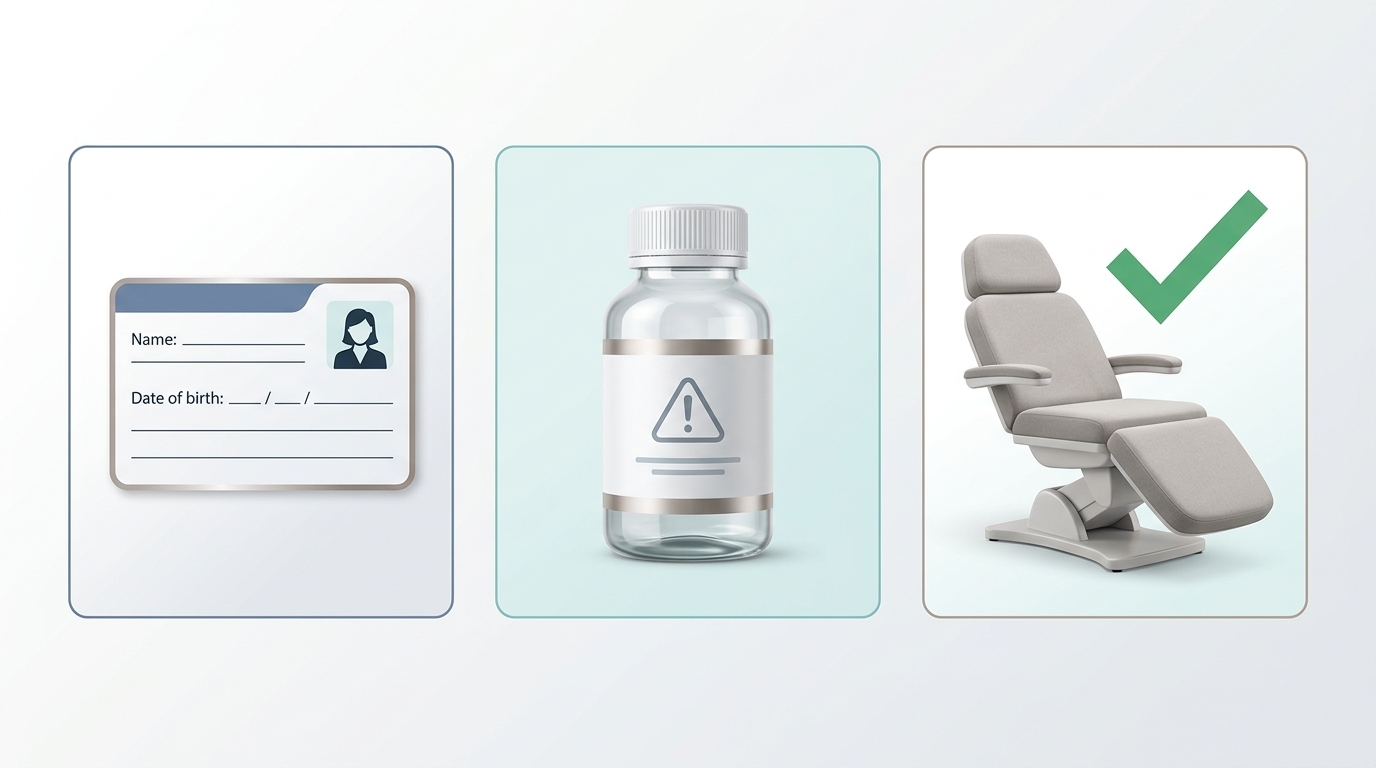
Many poor decisions about contraindications do not result from a lack of knowledge, but from gaps in the process. In practice, individual details may be available but are not brought together. A simple check can help make these blind spots visible in good time.
At its core, it covers three short checks. First, look at the person’s own history: earlier reactions, intolerances, current symptoms, pregnancy, ongoing treatments or significant existing conditions. Next, consider anything else that could have an influence, such as medication, injections or accompanying therapies. Only then compare these details with the planned treatment.
The value of this routine lies not in its complexity, but in its reliability. Important details are less likely to remain only in a conversation or get lost between the discussion and the written record. In medical and beauty-related settings, this can also improve team handovers and make it easier to assess whether warning signs have actually been checked.
This approach is particularly helpful when a case is unclear. Many problematic situations do not involve obvious reasons to rule out treatment, but fall into grey areas. A consistent check provides a calmer, more traceable basis for making a decision.
Mistakes involving contraindications often result not from one major error, but from several small gaps. The more clearly details about allergies, medication, pregnancy, existing conditions and earlier reactions are recorded, the more reliably a treatment can be assessed. If questions remain, a brief preliminary conversation can help clarify the situation calmly and make the reasoning easier to follow.
If anything is still unclear before your appointment, much can be discussed in a calm consultation beforehand. Mary4Beauty offers advice and beauty treatments with a focus on clear pre-treatment checks, hygiene and understandable guidance around the appointment. If you would like to discuss things beforehand, you can easily request a consultation appointment.