
Codecheck, Inci Beauty and Yuka scan cosmetics by barcode and rate ingredients using their own systems. This makes long INCI lists easier to understand — but the results depend heavily on database coverage and rating methods.
What Cosmetic Scanner Apps Can Do — and Where Their Limits Lie
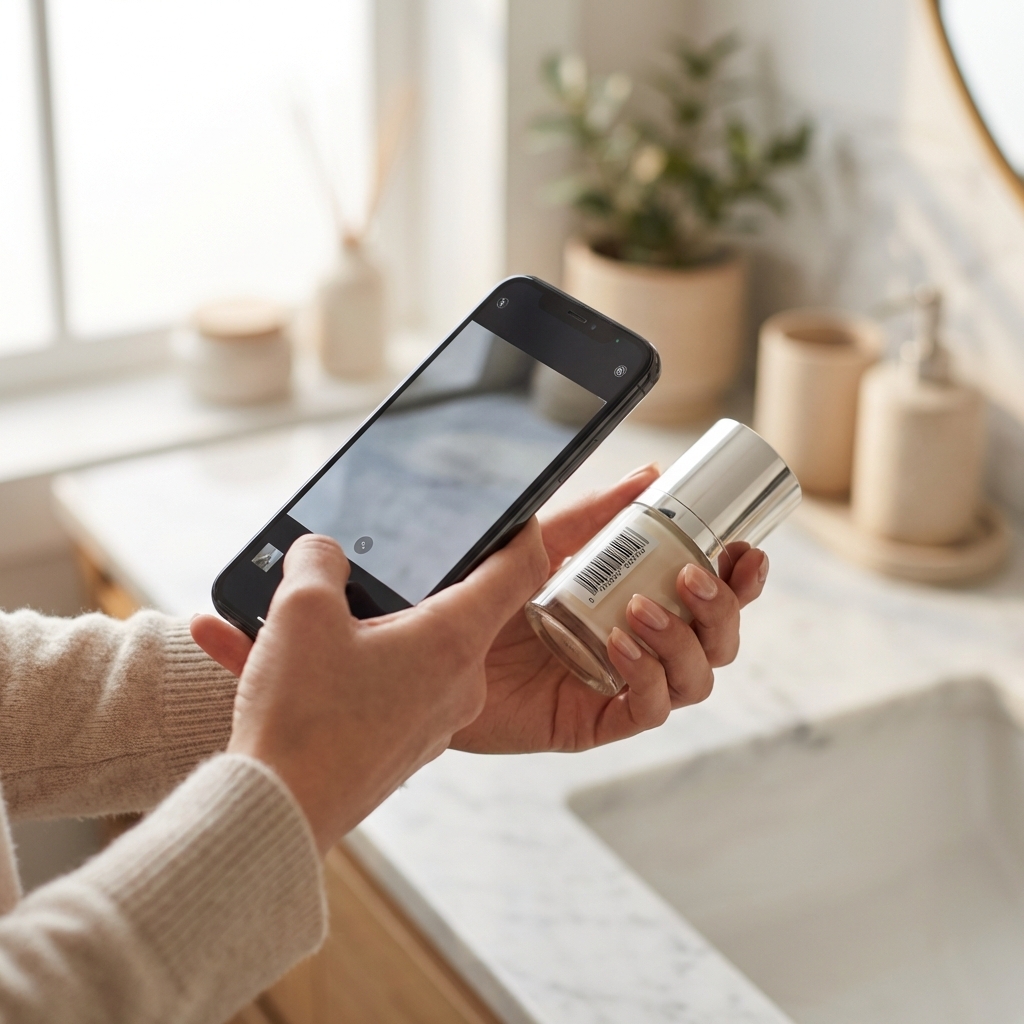
Long, technical INCI lists are standard on many products, but can be hard for non-specialists to interpret. Scanner apps address this by scanning the barcode, matching the product against a database and showing a rating from “relatively unproblematic” to “relatively problematic”.
Their value lies in how they present the information: Codecheck uses a colour-coded circle from green to red and suggests alternatives. Inci Beauty summarises its result as a score of up to 20 and flags individual ingredients. Yuka awards 0 to 100 points and assigns ingredients it rates as risky to categories such as “Allergens” or “Endocrine disruptors”.
The limits are both technical and substantive: if a product is not in the database, there is no rating at first. And even when it is listed, the app’s method determines how much weight is given to individual ingredients or manufacturing processes. This matters for women who visit studios and spas, because scores like these often prompt conversations about skin compatibility and product selection — even though the interpretation varies from app to app.
Free use is limited too: Codecheck restricts its basic version to five scans per week. With Yuka, scanning is free, but search requires an upgrade. According to the article, Inci Beauty is less intuitive, and the reasons for individual ratings are harder to understand.
Codecheck, Inci Beauty and Yuka: How Their Systems Differ
Developed in Zurich in 2010, Codecheck presents its rating in a colour-coded circle and suggests alternatives. User profiles can record which ingredients a person wants to avoid; products that are missing can be added to the database. According to the provider, product information comes from large databases — including government sources such as the California Department of Public Health — as well as manufacturers and retailers. Communications chief Niels Genzmer says that ratings of individual ingredients are “100 per cent independent”. The free version allows up to five scans per week; ingredient details require Premium.
Inci Beauty places greater emphasis on sustainability and rates products out of 20 points. According to the article, the main basis is how the ingredients are manufactured: synthetic or petrochemical processes are classified as harmful (orange). “Controversial” ingredients appear in red; if a product contains one, its overall rating falls to zero. The article cites studies, including the EU “Community Rolling Action Plan”, and collaboration with a university in Clermont-Ferrand specialising in chemistry as data sources. One limitation noted in the article is that the design is less intuitive and the explanations are harder to follow.
Yuka also uses barcode scanning, with a score from 0 to 100. According to the article, its database contains five million products, including two million cosmetics. Ingredients marked as high-risk are assigned to five categories: “Endocrine disruptors”, “Allergens”, “Irritants”, “Carcinogens” and “Pollutants”. The article notes as an advantage that categories and explanations are visible in the free version. Toxicologist Zoé Kerlo is said to be responsible for the scientific ratings; unlike the other apps, the studies behind them are listed, and Yuka also says it is “100 per cent independent”. Scanning is free, while search requires an upgrade; membership is available from 15 Swiss francs per year and includes offline use and personal preferences, among other features.
Barcode scanners make ingredients quick to compare, but they do not provide a single, universal truth: databases, weighting and transparency vary. In beauty practice, this reflects a trend towards getting more guidance from apps — while the standards keep changing.
If you would like to read more beauty and skincare updates: here you will find clear, practical insights into products, routines and ingredients. A classic facial treatment can also provide a good setting for a personal assessment.