A team in Shanghai compared two attachments for the same picosecond laser in women with melasma, using a different attachment on each side of the face. The women experienced less pain with the flat attachment. Their skin was also less likely to darken after inflammation. The study on effectiveness and tolerability was published in Frontiers in Medicine on November 16, 2026.
How the attachments compared on dark spots, pain, and recovery
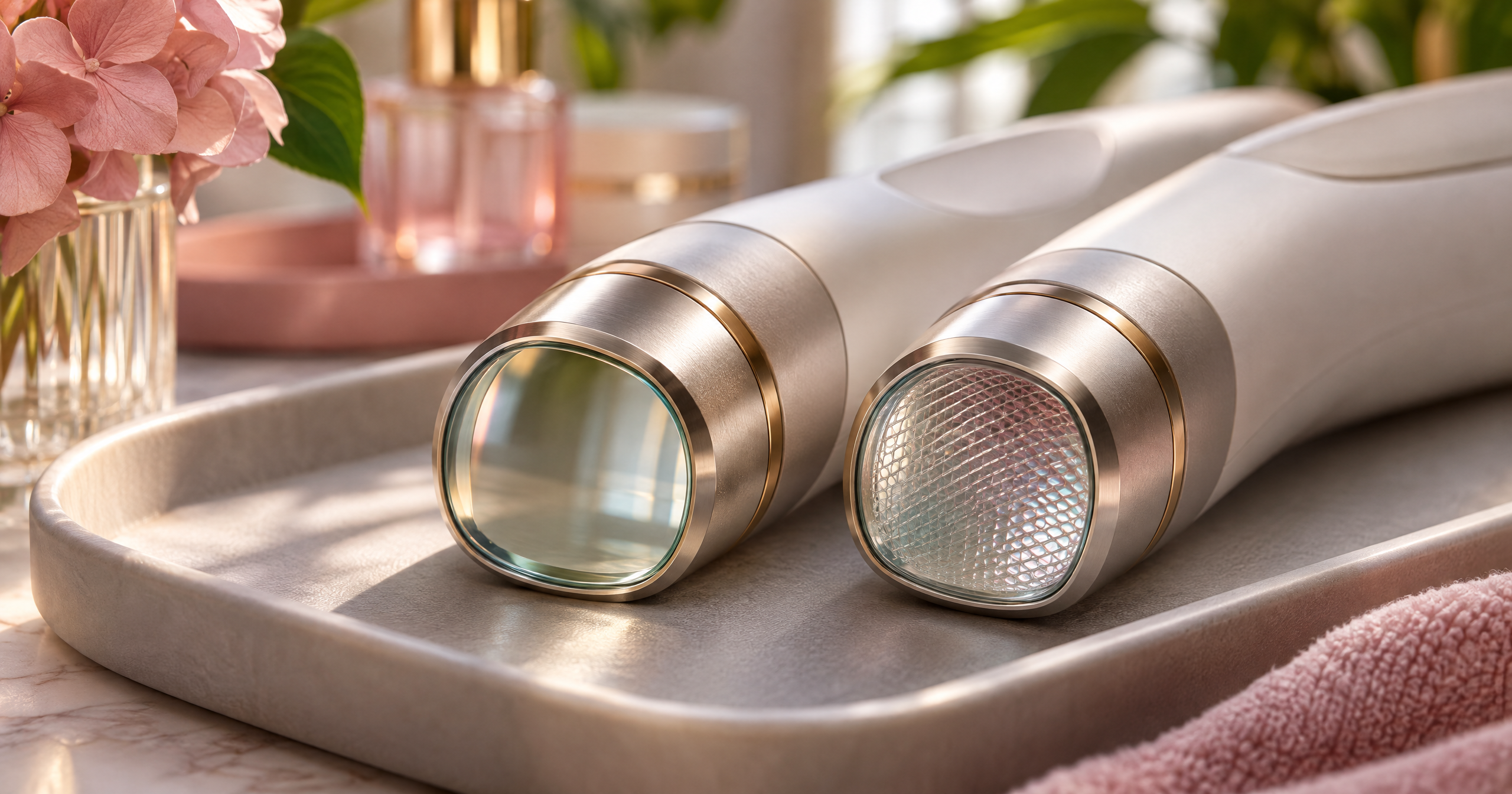
Skin darkened after inflammation on 35.9 percent of the sides treated with the flat attachment. With the diffractive lens array (DLA), an attachment that splits the beam, the figure was 60.3 percent. Mean pain scores were 4.18 with the flat attachment and 5.83 with the DLA. Both attachments were used with the same 755-nm picosecond alexandrite laser.
The team primarily looked at how pigmentation changed from baseline to four weeks after the third session. Melasma and light-induced skin changes improved with both attachments. After six sessions, mean scores for changes in pigmentation were close: 1.60 with the flat attachment and 1.65 with the DLA.
According to the study, skin recovered faster with the flat attachment. The reported figures cover different time frames: With the flat attachment, 60.7 percent recovered within one week. With the DLA, recovery took more than four weeks in 27.7 percent of cases.
The study found no statistically significant difference over the long term. That does not establish equivalence.
Limits of the findings and what to ask at a local consultation

The study included 80 Chinese women with melasma, symmetrical light-induced skin changes on their faces, and Fitzpatrick skin types III to IV. They received six treatments at four-week intervals. Seventy-eight women completed the 24-month follow-up.
The researchers randomly assigned an attachment to each side of the face. Comparing the two sides of the same person provides moderately robust evidence for the group studied. It remains unclear whether the findings apply to other skin types, populations, or devices.
For anyone considering treatment for dark spots, the study offers information beyond what happened to the spots themselves: Pain and recovery time also differed by attachment. A consultation is therefore also a chance to ask which device might be suitable, what your individual risk of developing additional dark spots is, and how long your skin might take to recover.
For consultations in Stuttgart or Fellbach, the comparison offers specific questions to ask, not a general treatment recommendation. The study does not say whether the device and its attachments are available locally. Further comparisons could show how widely the findings apply.
If you’d like to learn about the beauty studio regardless of whether you’re considering laser treatment, here’s information about Mary4Beauty.
Sources: https://www.frontiersin.org/journals/medicine/articles/10.3389/fmed.2026.2007032/full