Acne scars
The Hwang comparison discussed here studied skin ageing around the eyes, rather than depressed acne scars. It therefore does not establish which method is more suitable for a particular type of acne scar.[3]
Skin knowledge / Understanding treatments
Conventional microneedling acts mechanically. RF microneedling adds radiofrequency energy.[1][2] This comparison puts benefits and risks in context and suggests questions to discuss before treatment.
Understand the difference
Listen to the key points
Conventional microneedling uses fine needles. RF microneedling adds radiofrequency energy, which can heat tissue. This does not establish that one method is generally better. The direct comparison discussed here applies to the device and study group examined. Both methods carry risks. The FDA has received reports of serious complications with certain RF applications. These reports do not show how often harm occurs or which method is safer. Before treatment, ask about the device, the practitioner's qualifications, possible risks and realistic expectations.
01 / Two methods
In conventional microneedling, fine needles mechanically penetrate the skin. RF microneedling adds radiofrequency energy through specialised needles. This can heat tissue. The additional RF energy makes it a technically different procedure. That does not make it a higher level of treatment.[1][2]
The device, how it is used and the area of skin treated influence benefits and risks.[1][2] The findings of the comparison described below apply to the device studied and cannot be broadly extended to other applications.[3]
Our treatment page explains how conventional microneedling is offered at Mary4Beauty.
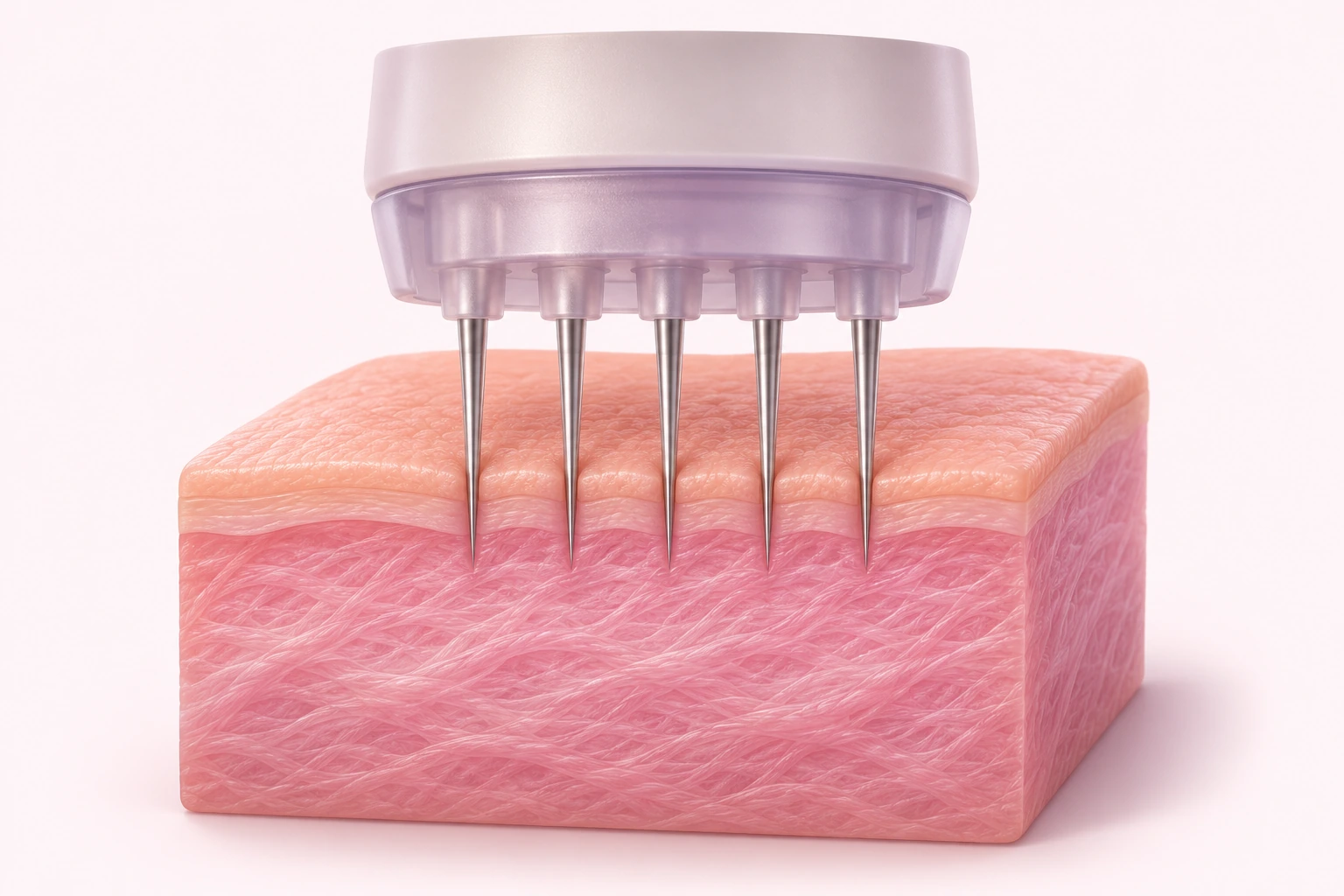
Fine needles create small mechanical injuries in the skin. This method does not involve additional RF energy.[1]
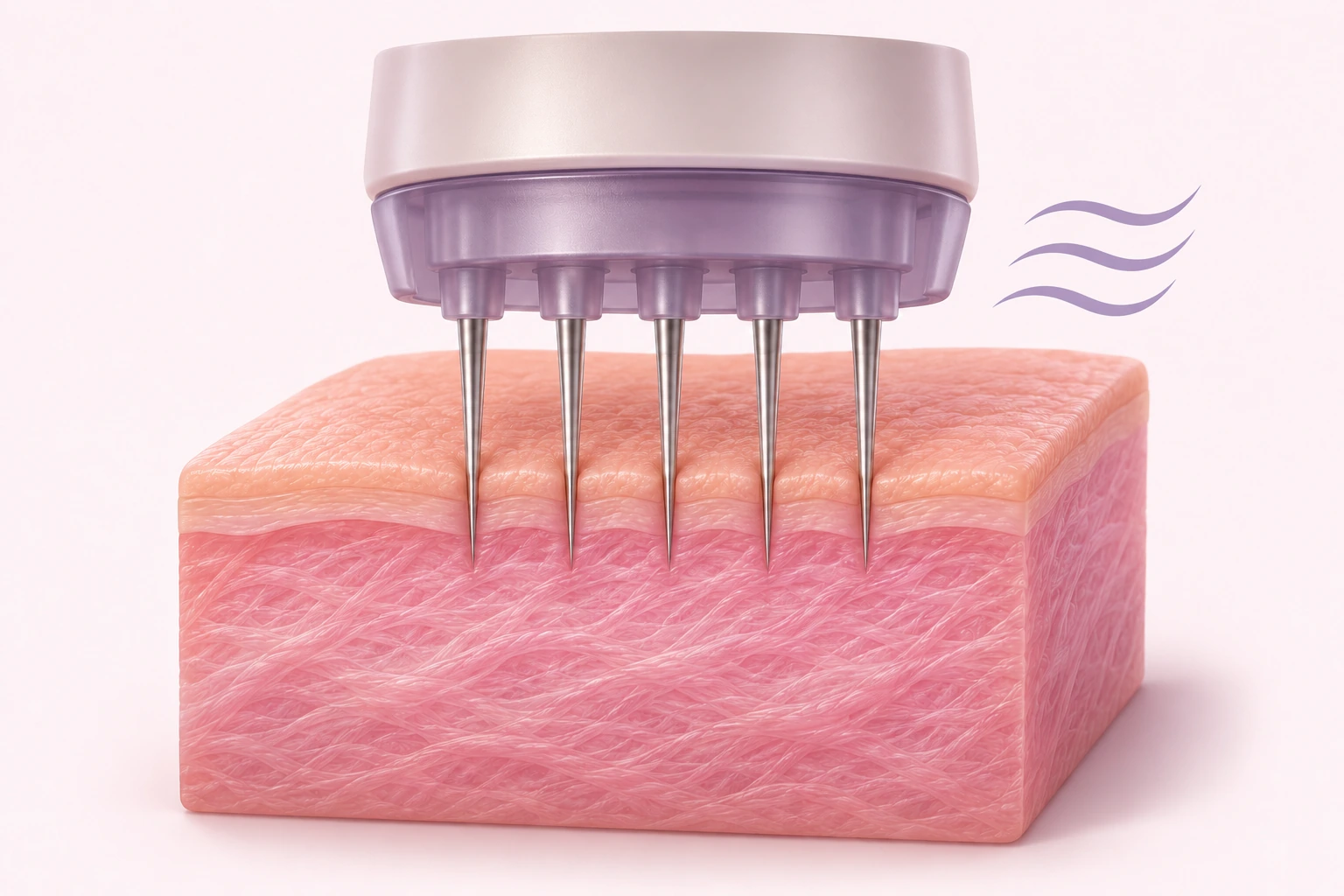
Radiofrequency energy is also delivered. The heating and its distribution depend on the device and how it is used.[2]
02 / The evidence
A small direct comparison by Hwang and colleagues studied the eye area in older women using a specific RF device, with the RF energy switched on and off. Its findings cannot be broadly extended to other age groups, body areas or devices.[3]
The Hwang comparison discussed here studied skin ageing around the eyes, rather than depressed acne scars. It therefore does not establish which method is more suitable for a particular type of acne scar.[3]
Clinical changes and instrument-based measurements were recorded in the eye area studied. This offers limited insight into one specific application, rather than evidence that RF is generally superior.[3]
Limitation: a specific study population, one device and limited follow-up.[3]
Skin roughness measurements can detect changes. A difference in a measurement does not automatically mean a visible or meaningful change in skin appearance for everyone.[3]
Limitation: measured results, personal perception and everyday outcomes are different questions.[3]
Elasticity and tissue measurements help researchers investigate possible changes. They do not provide a reliable basis for promising lasting, visible tightening.[3]
Limitation: general, long-term superiority has not been established.[3]
The limited follow-up in this study does not justify a promise of lasting effects.[3]
03 / Risks & limitations
Microneedling injures the skin. The FDA lists redness, bleeding, bruising and infections among the possible risks; pigmentation changes can also occur. The risks relevant to you should be assessed individually before treatment.[1]
In 2025, the FDA issued a safety communication about certain uses of RF microneedling. It describes reports of serious complications, including burns, scarring, fat loss and nerve damage.[2]
Reports do not establish how often harm occurs. This communication does not establish either the frequency of such harm or the level of risk compared with conventional microneedling.[2]
Context for Germany: The FDA is a US regulator. Its information provides safety context, not a statement of approval in Germany.[1][2] Special requirements may apply to radiofrequency procedures: under certain conditions, section 6 of the German NiSV reserves their use to physicians. Whether this applies in a particular case depends on the device and its use.[4]
04 / Before your appointment
These questions help distinguish a general description of a method from a specific treatment.
For details of our first-visit service, see the introductory treatment page.
Fine lines, skin texture and scars are different concerns. Which visible benefit matters to you personally?
Ask about the specific procedure, the practitioner's qualifications and which evidence actually applies to this treatment.
Ask for an explanation of individual considerations, possible complications and aftercare in advance.
Discuss possible benefits and remaining uncertainties, including recovery and how long a result may last.

At Mary4Beauty
Information about our cosmetic services: the following pages describe our conventional microneedling treatment and introductory treatment.
What does conventional microneedling at the studio involve? Our treatment page explains the service and procedure.
View treatmentWhat does the introductory treatment include? Read about the service for your first visit.
Explore your first visitThis section links to our own cosmetic services. The editorial comparison of methods is not an individual treatment recommendation. This article does not imply that Mary4Beauty offers RF microneedling.
This information does not replace individual professional advice.