Digital beauty advice can organize routines, suggest colours and bring new products to your attention. That can make it seem more precise than it really is.
AI is useful when you treat it as a first point of reference. It is worth looking more closely when skin condition, everyday life, data quality or marketing could skew a recommendation. This can help you assess more calmly whether a suggestion really suits you before you buy or book.
What AI does well—and where beauty advice can become too simplistic

AI can quickly sort a lot of information for beauty recommendations: product descriptions, frequently asked questions, colour families, visible preferences and broad skin-type details. It can feel personal very quickly. But it becomes genuinely reliable only when the data, goal and limitations remain clear.
A frequent recommendation does not automatically become more accurate just because AI repeats it. Many tools compile what appears online again and again. As a result, marketing claims, influencer formulas or oversimplified routines can start to sound like facts. For your skin, makeup goals or daily life, the advice may still be too broad. When you are deciding what to buy, clear signals of trust in cosmetics can also help you assess a recommendation more objectively.
This limit becomes especially clear with skincare. An app can assess photos or information you enter. What it often cannot know is the lighting, filters, makeup, current skin stress, products you use or your sensitivity. That is why AI beauty recommendations can be misleading even when the technology is only processing the data available to it.
Three questions can help as a quick check:
- What data does the tool use? - Does the suggestion sound more like advertising or a reasoned assessment? - Does the recommendation fit your skin today?
This is how AI can remain useful: as a guide, for comparisons and for inspiration. Pattern recognition alone is not enough to assess tolerability, skin condition or the need for a professional assessment.
When personal advice can do more than an app

Personal advice becomes more important when beauty decisions depend on more than a photo, skin type or product category. AI sorts input and draws suggestions from data. But it does not automatically recognize uncertainty, comfort limits, fragrance preferences, textures or a price range.
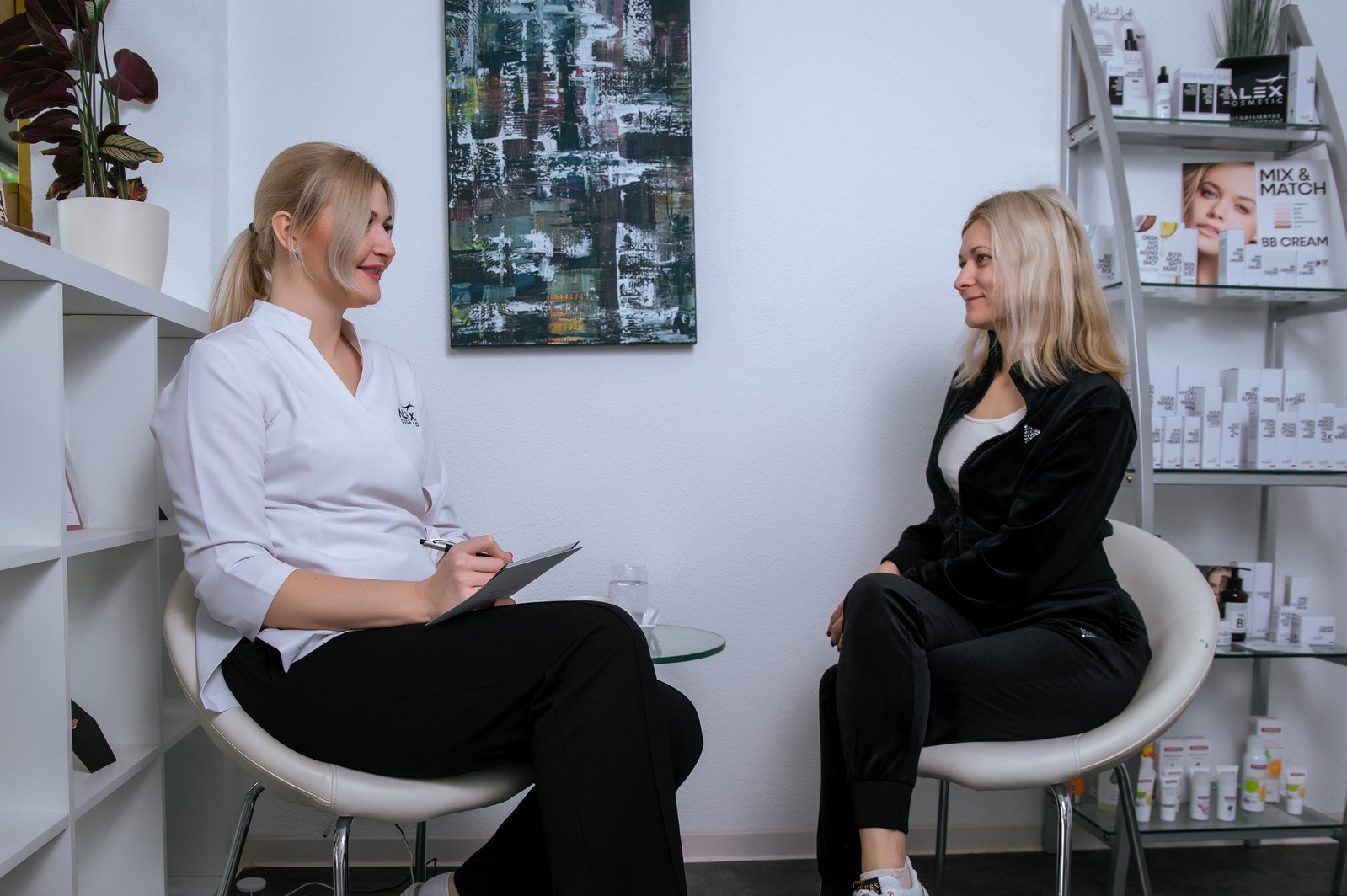
The difference emerges in conversation. An app processes image quality, questionnaires, product data, past clicks or general online information. An experienced professional can ask follow-up questions, notice contradictions and clarify priorities: fewer products, subtle makeup, a comfortable skin feel or a look for a particular occasion.
A digital recommendation is especially likely to mislead when it seems like a personal assessment but is actually based only on data patterns, marketing copy or simplified categories. The more complex the starting point, the wider the gap between apparent personalization and a genuine assessment.
A closer look is especially important when very sensitive skin is involved, or when there are unclear skin concerns, conflicting product information or apps suggesting many additional products. Makeup colours also look different on a screen than they do in daylight, with real skin texture and facial expression.
A calmer way to look at it is this: AI opens up options. Personal advice helps you compare those options with how your skin feels, your everyday life and what happens in practice.
AI is at its best when it organizes questions, gives you options and offers initial ideas. It becomes less reliable when skin condition, everyday life, product quantity or the origin of the data are unclear.
The next useful step does not have to be complicated. A quick check can help: where did the recommendation come from, what data is behind it and does it seem plausible for your skin today? If you are still unsure, personal advice can make the decision feel clearer.
If you want to assess a digital beauty recommendation, Mary4Beauty can offer a calm point of reference: beauty topics, studio context and clear guidance come together to help clarify skincare and makeup questions before you consider booking. If you decide to take a personal next step, a calm conversation about an appointment is one way to continue without pressure.