After long days at work, skin can sometimes look much more tired than usual. Some areas feel tight, while others look unsettled or react more quickly to skincare. You may then want a fresher appearance—without a long recovery period afterward.
AquaFacial may be a gentle cosmetic option when stress contributes to the way your skin looks. What matters is whether your skin currently needs mainly cleansing, hydration and calm—or whether irritation and inflammation need attention first.
Reading your skin’s signals: dull, dry, unsettled or sensitive?
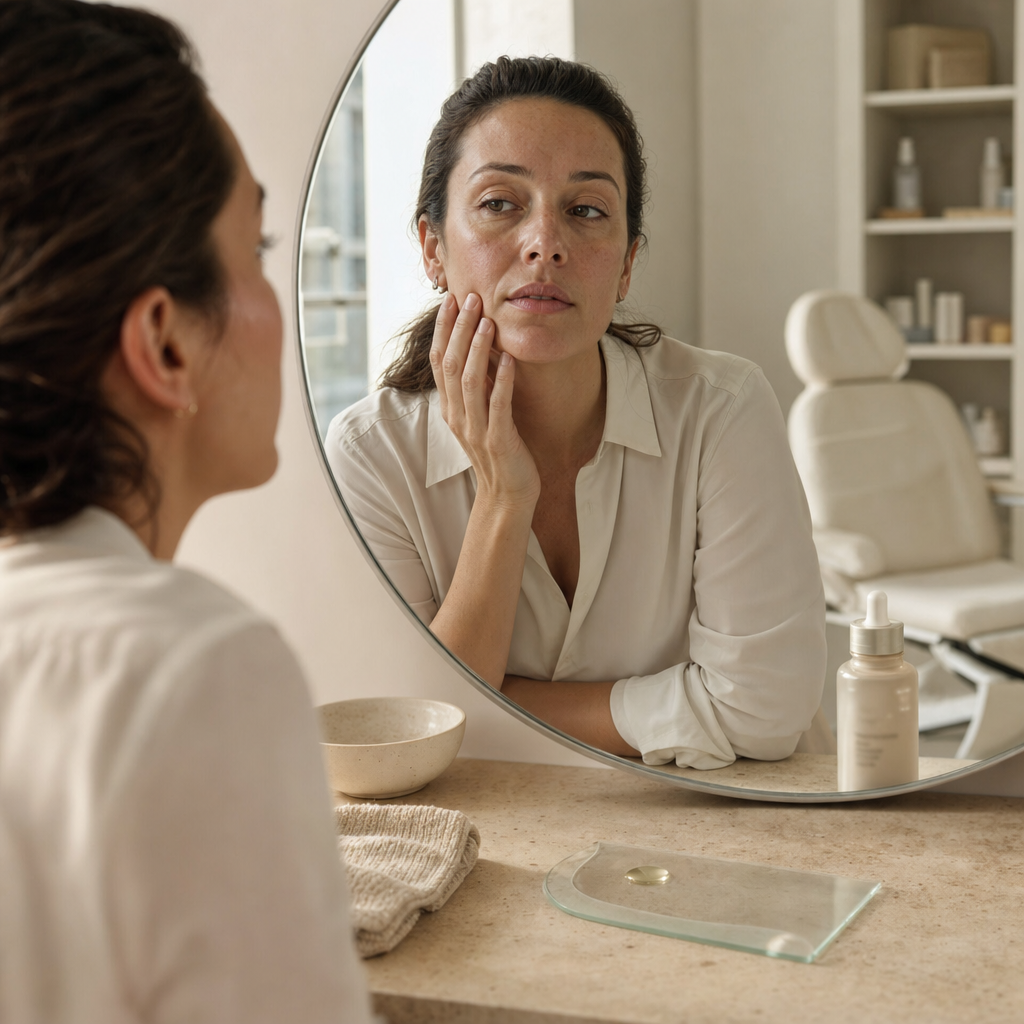
A stress-affected complexion rarely shows just one sign. More often, it is the overall picture: the complexion looks tired, the surface seems uneven, and some areas feel tight or react more quickly than usual. This can be noticeable in the mirror after too little rest, even when the skin does not look clearly “dry” or “blemished”.
Dullness first describes an appearance. The complexion reflects less light and looks flatter or slightly grey. This may be connected with surface build-up, a lack of moisture or rougher texture. With AquaFacial, the possible cosmetic effect is more about a fresher, clearer look—not a complete “reset” of the skin.
Dryness feels different. The skin is rougher, fine dehydration lines become more noticeable, and the face feels less supple. That does not automatically mean moisture is the only thing missing. Stress, indoor air, the season and skincare habits can all play a part.
An unsettled complexion often shows through visible pores, small bumps, sebum build-up or individual blemishes. Stress can make these signs more noticeable, but it does not always explain them fully. So it is worth taking a cautious view: AquaFacial can cleanse the surface and leave the skin feeling clearer, but it is no substitute for medical assessment if concerns persist or are particularly troubling.
Sensitive skin calls for extra care. It reddens more quickly, feels tight more easily or soon becomes irritated by products. This may point to a stressed skin barrier—the protective function of the skin’s surface. In that case, the question is not how to do “more”, but how gentle a cosmetic step should be.
Assessing whether AquaFacial fits: treat, adapt or pause?
The decision starts with your skin’s current condition, not the treatment name. Stress can show up as a dull complexion, a dry feeling, an uneven texture, pores that look congested or increased sensitivity. That combination affects which cosmetic step seems appropriate at the moment.
AquaFacial may be a better fit when cleansing, gentle exfoliation and hydration match what you can see. For a calmer sense of what to expect, read how an AquaFacial works and what it can offer. Here, exfoliation means gently loosening dead skin cells. Any expected benefit remains at the surface. Build-up may look reduced, hydration may improve how the skin feels, and a tired complexion often looks more awake.
Adapting the treatment matters when the skin needs support but reacts sensitively. The focus then shifts away from doing as much cleansing as possible and toward a more cautious approach. Not every AquaFacial uses the same serums, intensity or focus. It therefore matters whether the skin appears dry, oily, dull or sensitive.
Pausing marks the limit of this cosmetic decision guide. With significant irritation, pronounced inflammation or ongoing skin problems, the question of “more glow” may no longer address the main concern. The distinction between cosmetic care and symptoms that should be assessed medically then becomes more relevant.
A common misconception is that AquaFacial can quickly resolve every skin sign linked to stress. It is more accurate to see it as gentle cosmetic support for skin that looks dull, dry or congested. The next step depends on what is visible: offer freshening support, adapt gently or set the cosmetic treatment aside for now.
Stressed skin rarely needs more pressure. It often helps to pause and assess what you see: does it look dull, dry or congested, or does it mainly feel sensitive? AquaFacial may be suitable when cleansing and hydration are the priorities. With pronounced irritation, open areas or ongoing concerns, holding back is the wiser choice. Before an appointment, it can help to briefly note your skin’s signs, its sensitivity and the time you have available.
If you are unsure, you can share your skin concerns and available time window when planning your appointment. Mary4Beauty can calmly help you assess whether AquaFacial or another gentle step is a better fit for visibly tired or stress-affected skin—clearly and without pressure.