
If every INCI list—the ingredients list on a product—feels like a small exam, skincare can quickly become tiring. In everyday life, there is often little time to carefully assess every warning, trend and long ingredient name.
Simple priorities can bring more clarity: your own skin signals, known intolerances, fragrance and how often you use a product. This can make product choices feel less stressful, easier to understand and more practical for an ordinary skincare routine.
Step 1: Give your skin’s signals more weight than trend warnings
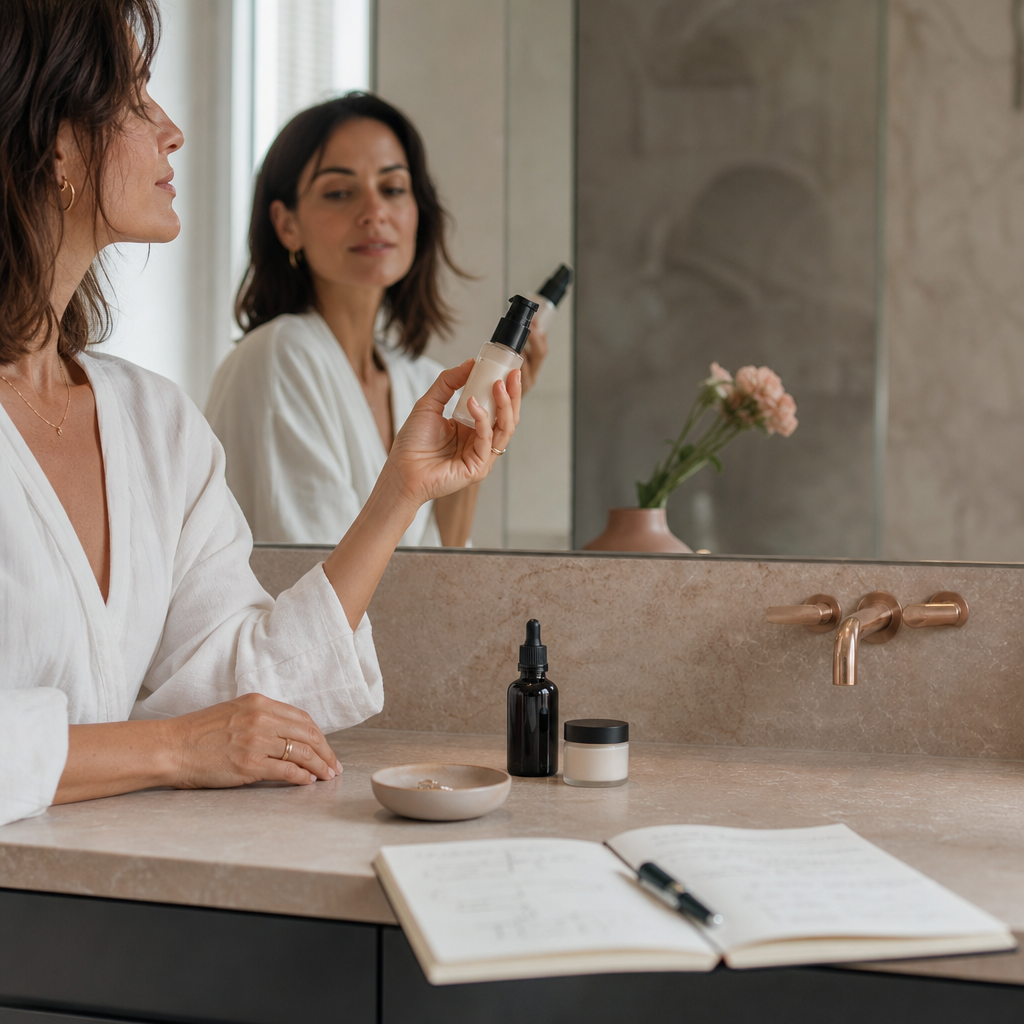
The first way to reduce ingredient overload is usually not to start another lengthy search. It is more useful to ask what your own skin actually shows in everyday life. Trend warnings can feel urgent because they single out individual ingredients. But choosing a product depends on whether the concern fits your own experience, routine and actual use; a basic guide to understanding skincare ingredients can offer guidance without requiring you to decode every INCI list perfectly.
Your skin’s signals are not a diagnosis. They are simple observations: a product feels unfamiliar, you repeatedly do not tolerate a certain type of product well, or heavily fragranced formulas stand out more often than simpler ones. These patterns matter more than a single warning on social media because they are closer to your own experience.
A sensible order therefore starts with known intolerances and recurring reactions. Next come products you use often. Trend topics alone come further down the list. This takes pressure out of the decision without ignoring ingredients.
Perfectionism is a common trap. Every new term then becomes a reason to question a product. Calmer priorities turn this around a little: not every piece of information deserves the same attention. Product choices become less absolute and more dependent on context.
Step 2: Use a simple priority matrix
A priority matrix turns the question “Is this ingredient relevant to me?” into a calmer way to decide. It does not replace a professional assessment of a formula. Its value is in sorting attention rather than making every long INCI name seem equally important.
Two axes are often enough: personal relevance and frequency of use. Personal relevance means asking whether you have known intolerances or recurring reactions to certain types of products. Frequency of use means whether a product is used daily, occasionally or only rarely.
You can think of four categories:
- High personal relevance, frequent use: these are the strongest signals for a decision, for example a known reaction to a product you use every day. - High personal relevance, infrequent use: keep it in mind, but give it less space. - Low personal relevance, frequent use: a matter-of-fact assessment can stop a routine product from seeming problematic because of every warning. - Low personal relevance, infrequent use: this category reduces mental load because rare exceptions do not determine your entire selection.
The key point is that an ingredient’s name alone does not determine its priority. Its significance comes from context: your experience, the product type, frequency of use and its role in your routine.
This is how the matrix can slow down impulsive decisions. It does not offer absolute certainty, but it gives you a clear order. That alone can make skincare easier to manage day to day.
Clear priorities take pressure out of product choices. The strongest clues often come from known intolerances, recurring skin reactions and how often a product is used. Fragrance or other ingredients that stand out have a different weight when they are part of a daily product.
Instead of researching everything again and again, a quick check of your routine can often bring more calm. If you remain unsure, it can help to note your questions for your next studio visit.
If you want to assess your skincare routine more calmly, you can keep learning at your own pace with Mary4Beauty. The studio offers guidance on beauty and a relaxed way to explore suitable services without pressure; an appointment for guidance can be a good next step.