
An apartment may feel comfortable today and still become awkward to use later. This is especially hard to judge during a viewing or renovation: floor plans and photos reveal little about what it feels like to move around day to day.
A home check based on Universal Design helps bring these details into focus. It considers spaces that work well for different people at different stages of life. The focus is on possible barriers today and the flexibility to make changes later. Rooms are not the only thing that can change over time: routines and lifestyles can, too.
Before the viewing: Which everyday routes matter?

A floor plan shows the rooms, but little about how they work together day to day. Three questions help focus on how the space is used day to day:
1. What is the route like from the entrance to the living area? Doors, thresholds and clear space need to work together. With shopping bags or several people moving through, even a passage that looks spacious can feel tight.
2. What is the route from the sleeping area to the bathroom? In low light, the sequence of rooms and clear wayfinding matter more. Those details say more about everyday use than the label “age-friendly.”
3. Could the rooms be used differently later? Household size and needs sometimes change. A layout that works today does not automatically leave room for those changes.
The entrance, bathroom and kitchen are good places to start: important routes and everyday tasks come together there. One distinction matters here. “Low-barrier” means there are as few obstacles as possible; it does not automatically mean a home is accessible. Accessible building design has specific requirements, including those in DIN 18040-2. A floor plan alone cannot show whether a home meets them or can later be adapted.
During the walk-through: What is actually easy to use?
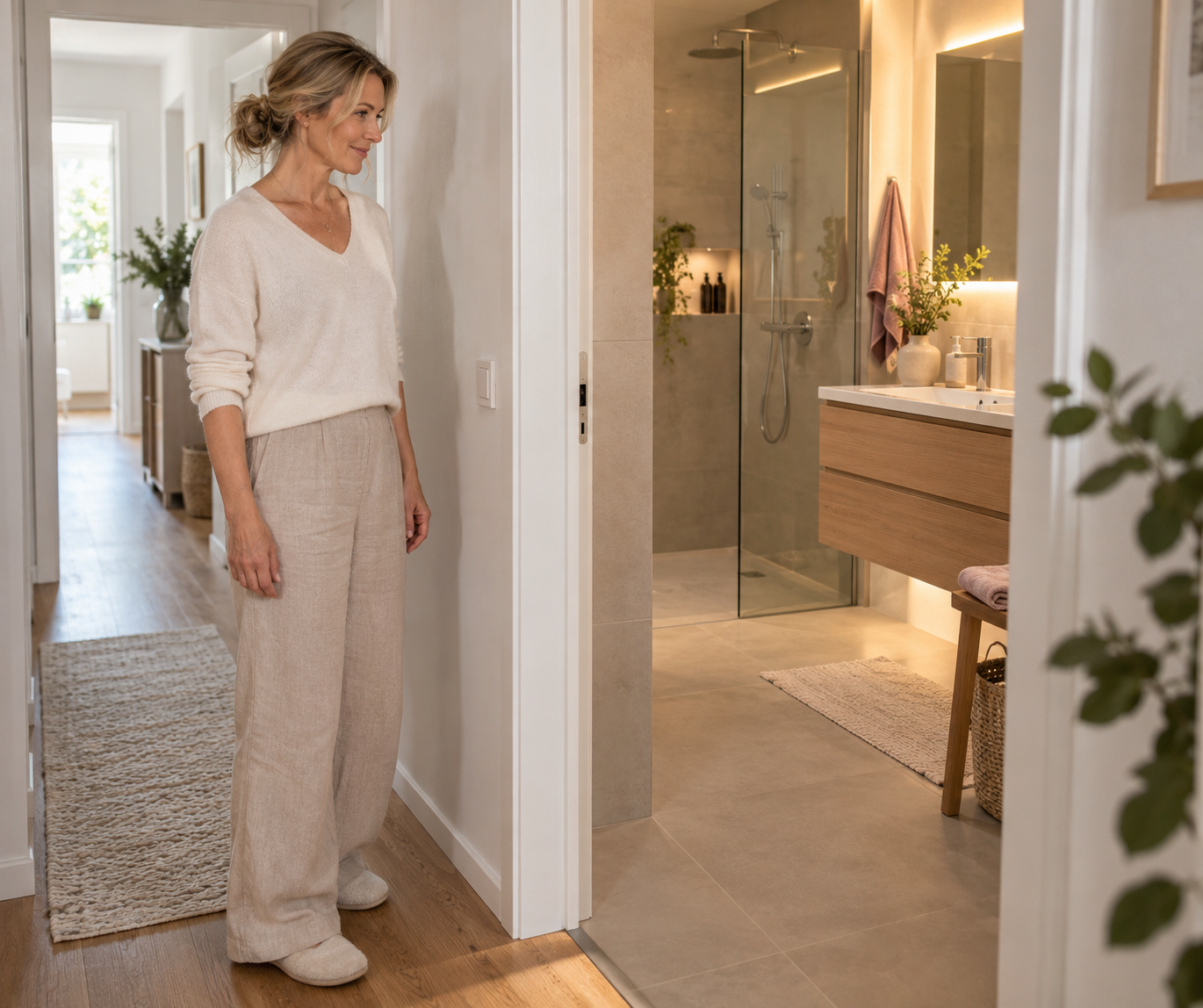
Some differences become apparent in person and are easy to miss in photos. During the walk-through, look at the rooms and the routes between them:
4. Check the routes through the home. A threshold, a door that swings open or furniture can limit the space available for moving around. The interaction becomes clear, for example, when someone is carrying something while opening a door.
5. Take a closer look at the bathroom and kitchen. Doors, maneuvering space and work areas come together here, often in a tight space. Even when everything looks tidy and calm, that says little about how easy these areas are to use.
6. Check the lighting and controls. Important areas can sit in shadow even in a bright room. Whether switches are easy to reach depends on how they are used.
7. Include the route outside the home. Shops and transport links may be close by. An awkward route to them can still make day-to-day life harder.
After the walk-through, it helps to distinguish the barriers encountered from open questions about the building. Furniture can be moved; a fixed threshold or narrow passage is harder to change. A visual inspection alone cannot reliably establish whether a building element can be altered or which requirements apply. The fact that a home seems low-barrier does not prove that it meets DIN 18040-2.
Whether a home remains usable over the long term depends on more than its size or layout. Clear routes, rooms that are easy to reach and the option to make later changes should be considered together. The area around the home also affects how practical day-to-day life is.
A walk-through makes barriers visible, but cannot reliably assess what structural changes are possible. Any open questions about adapting the home can be clarified with a specialist afterward. Even a well-planned home cannot guarantee healthy ageing. Questions about stress and sleep concern another part of everyday life.
This home check can be saved as a reference for your next viewing or renovation plans.