
People with normal skin often apply new skincare straight to the whole face. It seems like the obvious thing to do, but it is not always the best idea. Even balanced skin can react to fragrances, preservatives or potent active ingredients.
A quick patch test offers a little more reassurance. It can help reveal possible reactions early and avoid unnecessary irritation. If a reaction does occur, the article on dealing with mild skin irritation may also be helpful.
Is a patch test really necessary for normal skin?

Normal skin often seems uncomplicated. It usually feels comfortable, does not get overly shiny and tends to stay calm day to day. That is why it can be easy to think that patch testing is only needed for sensitive or problematic skin. That view misses the point.
Whether a product is well tolerated depends not only on skin type, but above all on its formula. Fragrances, preservatives or active ingredients such as retinol, AHA, BHA or salicylic acid can cause redness, dryness or stinging even on skin that seems unremarkable. Normal skin is therefore no guarantee that every new product will suit it without a problem.
A test is useful precisely because there may be no warning signs beforehand. A patch test is less a sign of particular sensitivity than a simple check. It offers a small but sensible safeguard before using a new formula or a more potent product over a larger area. If you are often unsure how well your skin will tolerate products, professional support for skin that reacts sensitively may also be helpful.
How to test new products easily
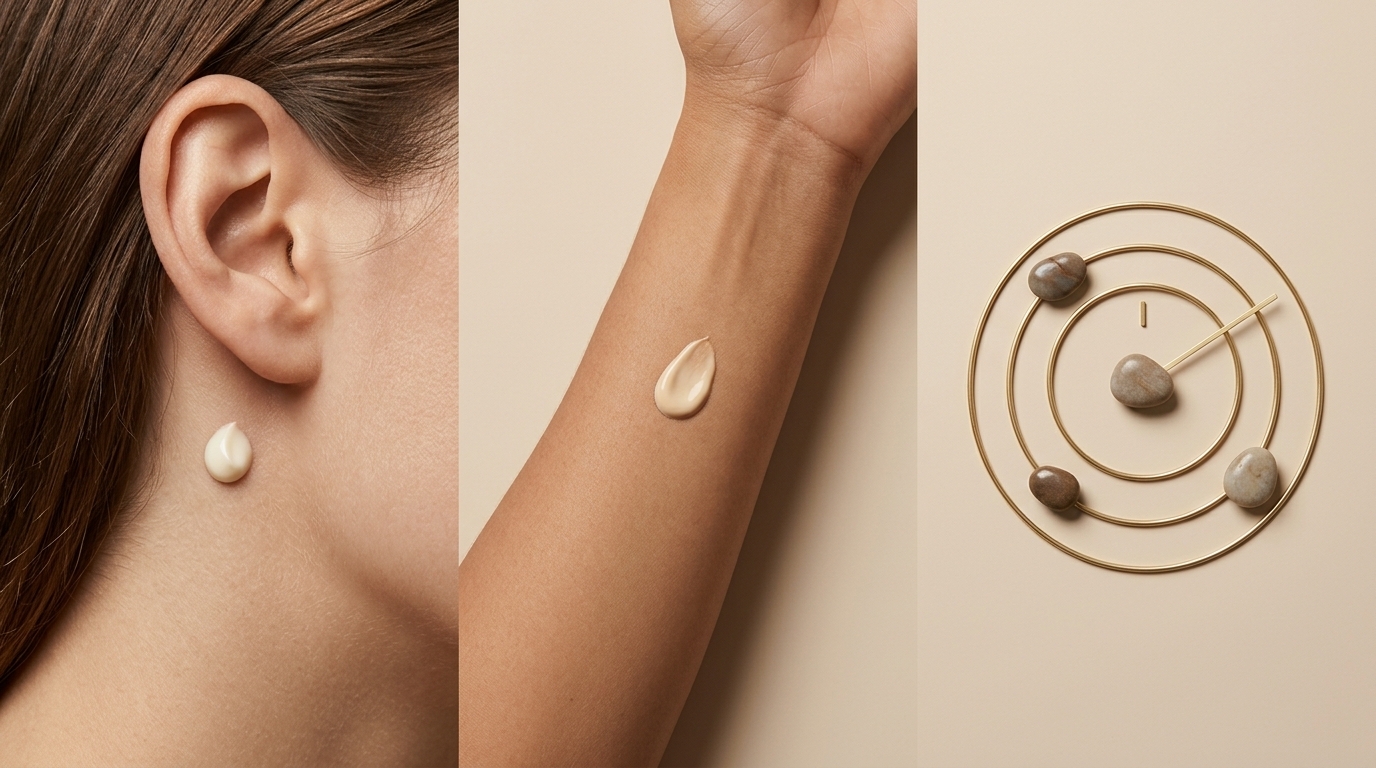
A patch test based on skin type is a small tolerance test before the first larger application. Usually, a small amount on an inconspicuous area, such as the forearm or behind the ear, is enough. It takes little effort, and the benefit can be significant: reactions are more likely to stay local and easier to monitor.
The process is simple. Apply a small amount of the product to a limited area, then observe it for 24 to 48 hours. Some reactions appear later, which is why some instructions mention up to 72 hours. A test with no visible reaction is helpful, but it is not an absolute guarantee because facial and body skin can react differently.
Typical signs include: - Redness - Itching - A feeling of tightness - Dryness - Small blemishes or stinging
The basic idea is the same for every skin type. It is not about being perfect, but about getting an early, clear indication. That is exactly what makes patch testing useful for normal skin: little effort, but a good first indication of how well new skincare may be tolerated.
Normal skin is not a free pass for every new product. The formula often matters more than skin type alone. A patch test takes very little time and can provide early signs of redness, dryness or stinging.
This small extra step is especially worthwhile with new active ingredients or unfamiliar products. If your skin reacts repeatedly, a professional assessment may provide more clarity.
If you are unsure about new skincare, personal advice before buying a product or having a treatment can help. Mary4Beauty offers individual beauty consultations and suitable recommendations for a safe, well-tolerated skincare routine; if you wish, you can also arrange a consultation appointment.