
Once a home has heated up in summer, the warmth often lingers in the rooms well into the evening. Usually, no single trick solves it; a steady routine works better: keep heat out early, make targeted use of cool air and use active cooling deliberately.
This keeps the indoor climate more comfortable without using unnecessary electricity or making the air feel dry. If dry indoor air is noticeable on your skin too, the article Dry Skin: Why Drinking Water Alone Is Rarely Enough offers a calm, complementary perspective.
Before it gets hot: keep heat out

The most effective strategy starts before rooms heat up too much. Heat enters not only when outdoor temperatures are high. Direct sun, warm air brought in while airing out and appliances left running all add to it. The less heat gets into the home during the day, the less you need to cool it later.
Shade makes a real difference here. Exterior sun protection blocks solar energy before it even reaches the windowpane. Curtains, roller blinds or shutters on the inside help too, but later in the process: by then, some of the heat has already reached the glass or entered the room.
Open windows can be misleading, too. Fresh air sounds appealing, but when it is hot outside, it brings extra heat indoors. Ventilation cools mainly when the air outside is cooler than the air indoors. That is why night air is often more useful than leaving a window tilted open all afternoon.
Small sources of heat add up as well. Lamps, screens, chargers, cooking and appliances left running increase the heat load. You notice it most in small rooms or a home office. A switched-off lamp does not actively cool the room, but it does prevent extra heat.
These passive steps are the starting point. Windows, shade, air exchange and indoor heat sources show how much additional cooling is actually needed.
When the heat is already inside: balance cooling, air movement and humidity
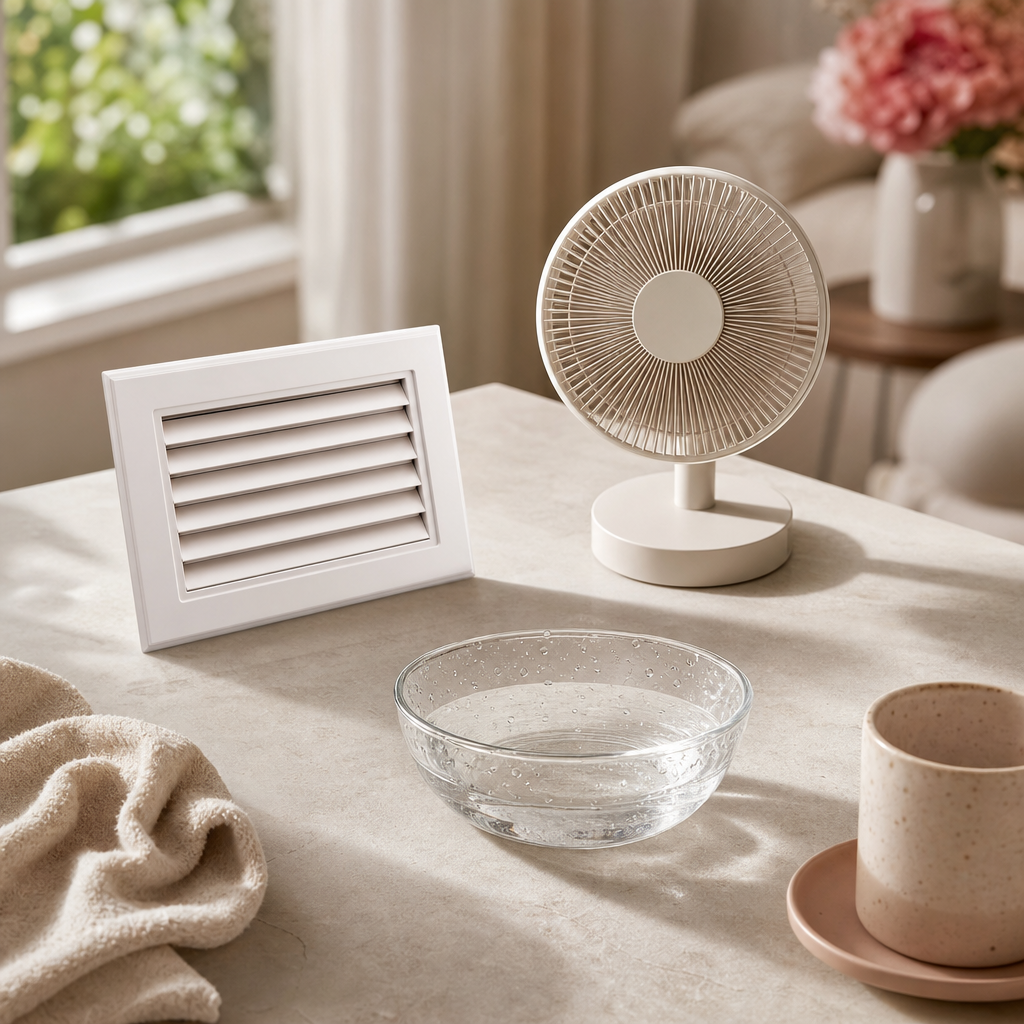
When heat is already trapped inside the home, the temperature reading alone does not tell the whole story. How a room feels depends on cooling, air movement and humidity. An air conditioner can lower the temperature and, depending on the unit, draw moisture from the air. A fan only moves air; it does not cool a room the way an air conditioner does.
Very low settings seem like the obvious choice, but they do not always solve the problem better. Cooling the room sharply can use more electricity and make the air seem dry. Moderate, steady cooling often feels more comfortable and keeps the area where people spend time at a stable temperature.
Air movement changes how warmth is perceived. In a bedroom or home office, a fan can distribute cooled air more evenly. This is especially useful when the air conditioner reaches only part of the room directly. It does not replace cooling, but it makes temperature differences less noticeable.
Humidity also affects comfort. At the same temperature, muggy air feels heavier. Air that is too dry can be uncomfortable too. Damp towels or bowls of water are therefore not a solution for every room, but at most a small adjustment, depending on the indoor conditions.
These questions are a quick check:
- Does the air conditioner reach the area where people actually spend time? - Does moving air spread the coolness or just move warm air around? - Does the room feel muggy, dry or mainly overheated? - Is warm air coming in through open windows right now? - Are appliances, lights or cooking adding extra heat?
The goal is not an icy-cold room. A stable indoor climate is better, with shade, ventilation, air conditioning and humidity working together.
Keeping a home cooler is mostly about timing. Earlier shade reduces heat gain, cool outdoor air helps at the right times of day, and an air conditioner or fan works better when it suits the situation in the room.
How the air feels matters too: muggy, dry or simply overheated. That usually makes it clearer quite quickly whether shade, ventilation or moderate cooling is the next step likely to make a noticeable difference.
If you want to save this checklist for hot days, you can go over the key points again: shade, ventilation and how the air feels. Mary4Beauty combines beauty services with clear content on skincare, wellbeing and relaxed everyday routines; the Beauty Blog has more calm inspiration for small moments of wellbeing.