
Juravendis describes new EU cosmetics limits taking effect on January 1, 2027, for products placed on the market for the first time. According to the law firm, the substances affected are aluminum, citral, and benzyl salicylate.
According to this account, cosmetics shoppers in Germany will not face an immediate halt to sales of older stock. For legal background, there is also an article on the EU cosmetics rules for CMR substances.
Which Everyday Products Could Be Affected
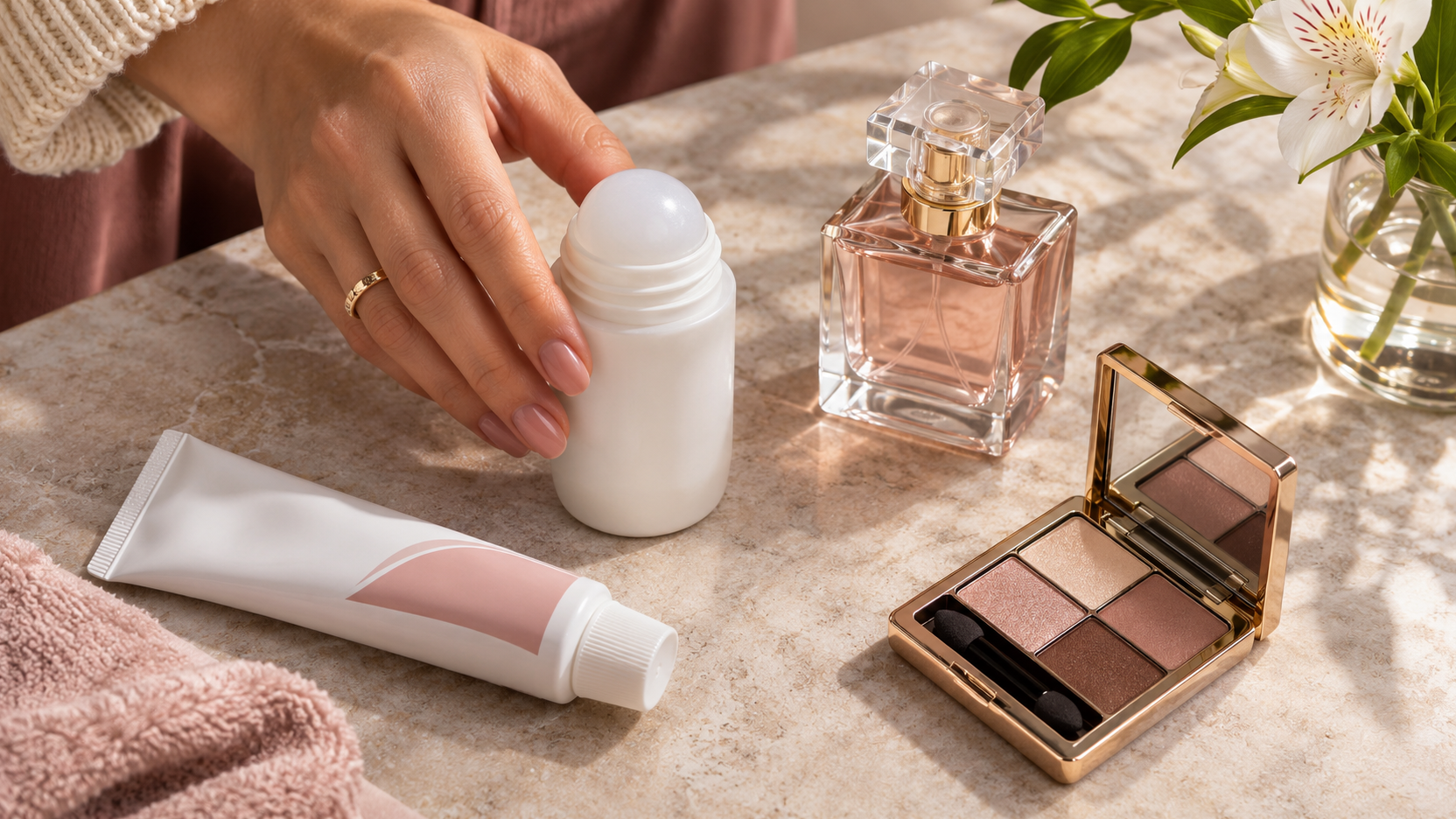
The aluminum requirements described affect products including deodorants, toothpaste, lip products, and eyeshadow. According to juravendis, the maximum levels vary by product type. The determining factor is said to be the aluminum content in the ready-to-use product, including aluminum from pigments or clays.
For citral and benzyl salicylate, the law firm likewise cites varying maximum concentrations rather than a general ban. These fragrance ingredients may be found in perfumes and personal care products, for example.
For beauty shoppers, the news therefore concerns both personal care products and makeup.
An important distinction remains when it comes to labeling: according to the source, formulation limits and ingredient labeling are separate requirements. The presence of a fragrance ingredient in the ingredient list therefore does not, on its own, establish that a limit has been exceeded.
Why Older Stock Is Not Set to Disappear From Shelves Immediately

For products first placed on the EU market before the January cutoff date, juravendis generally gives June 30, 2028, as the last day of sale. For certain citral isomers, meaning variants of the fragrance ingredient, the article gives July 31, 2028.
Accordingly, the manufacturing date alone is not decisive.
The law firm describes placing a product on the market for the first time as the first supply of each individual unit by the manufacturer or importer. According to this account, goods produced in December 2026 but first supplied in January 2027 would already have to meet the new requirements.
The article dated November 14, 2026, does not concern a new decision: according to juravendis, Regulation (EU) 2026/909 was adopted back in April 2026.
The transition described by juravendis distinguishes between requirements for cosmetics newly placed on the market and the sale of existing stock. For shoppers, this means that what matters is not just the turn of the year, but also how a product enters the distribution chain.
For more news about cosmetics, visit our Beauty News.