The Trump administration wants to curb the patchwork of AI laws across US states through Executive Order 14365 (EO 14365). In the short term, the main change is in the approach: according to Reed Smith, state rules remain enforceable, adding uncertainty for providers of digital customer services, too. Similar state-level initiatives can be seen beyond AI—for example, in stricter ingredient-disclosure rules in Louisiana and Texas.
What EO 14365 sets in motion—and what stays the same
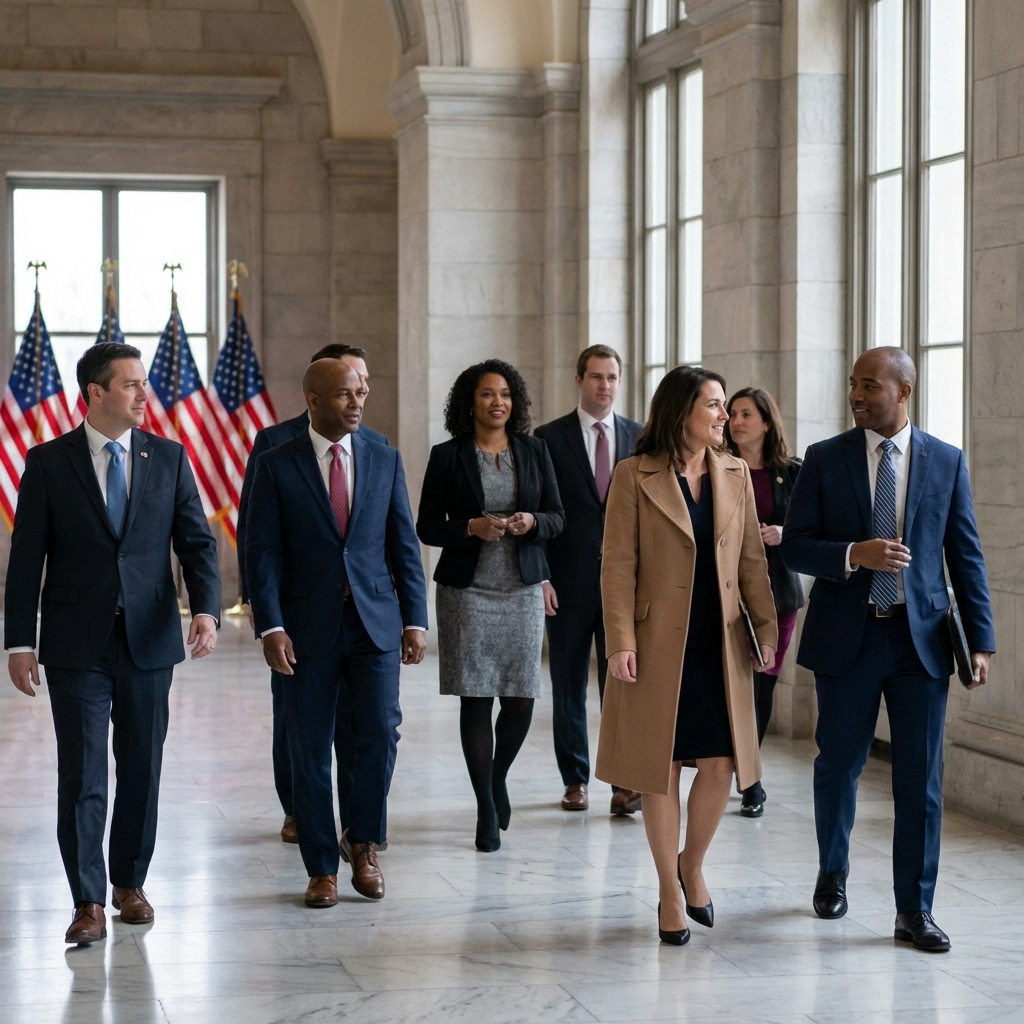
EO 14365 aims to bring more AI rules under federal oversight and push back requirements set by individual states. The focus includes state-level obligations such as bias audits, impact assessments, extensive transparency requirements and rules for “truthful” AI outputs.
The immediate effect matters: the order mainly creates processes and assigns responsibilities; it does not introduce new substantive obligations right away.
Several levers are named: an “AI Litigation Task Force” at the Department of Justice (DOJ) to bring lawsuits against state laws deemed unconstitutional or preempted by federal law; a direction to the Department of Commerce (DOC) to identify especially “onerous” state AI laws within 90 days and report them to the DOJ—along with a note that, where legally possible, certain broadband funding could be tied to the absence of such laws. The order also outlines possible positions by the Federal Trade Commission (FTC) and Federal Communications Commission (FCC) on standards that could preempt conflicting state requirements, as well as legislative recommendations for a federal framework.
At the same time, EO 14365 does not automatically repeal state laws. According to the source, state and local AI rules remain enforceable for now, including broad regimes such as Colorado’s law against algorithmic discrimination—unless courts intervene or Congress passes a federal law that preempts them.
What it means for businesses—including customer-facing industries
For businesses, EO 14365 mainly adds friction in the short term: it sketches a path toward a unified federal approach, while state requirements continue to apply.
This especially affects companies that use AI across multiple states—for appointment automation, personalized recommendations, marketing or HR tools, for example. Many state rules on audits, assessments and transparency apply precisely in these areas.
Three federal tracks could change the picture more quickly: DOJ lawsuits challenging certain state laws, the DOC’s 90-day review of “onerous” requirements, and possible FTC or FCC initiatives on standards that would preempt state rules.
Why this matters to the public: many beauty and wellness businesses use platforms for online booking, advertising or customer communications for services such as classic facial treatments and other offerings. If the AI features in those tools remain subject to different rules in different states, transparency and documentation requirements may shift throughout the entire tool chain.
For context, see the AI governance overview at https://mary4.beauty/explainer/ai-governance and the US regulation review at https://mary4.beauty/news/usa-ki-regulierung-ueberblick.
Readers who want to keep up with developments in US AI regulation can find concise, contextualized updates on technology, AI and regulatory trends in the mary4.beauty News Digest.
EO 14365 is above all a signal: the federal government wants to push back state AI laws more strongly without repealing them immediately. The patchwork therefore remains for now, and the decisive developments are likely to come from the DOJ, DOC, FTC and FCC.