The skin microbiome: communities and habitats
Skin supports different microbial communities. Local conditions, body site and individual differences help explain why these communities vary.
Understand skin, care and treatments through clear explanations, comparisons and sources for informed choices.
Editor’s pick
The skin barrier helps retain water and protect against outside influences.
Skin supports different microbial communities. Local conditions, body site and individual differences help explain why these communities vary.
New tissue fills an injured area, a new skin layer covers it, and the tissue continues to change. A clear explanation of repair, remodelling and scar properties.
New cells in the hair bulb form the material of the visible hair. The cycle describes changing states; measurements such as density and diameter answer different questions.
Melanocytes make melanin and pass pigment-containing structures to other skin cells. A phototype describes sunlight response. Understanding the difference makes descriptions of skin easier to interpret.
Skin changes over time, and UV can add further changes. Understanding connective tissue helps explain these influences and the limits of what appearance tells us.
Care labels describe features; a current observation adds the area and timing. Compare these viewpoints to understand the words and their limits.
Protein-cleaving enzymes or physical contact: understand the principles, compare meaningful criteria and put a laboratory test of eleven products in context.
Sensitivity, irritation and contact allergy describe different things. Understand sensations, the barrier, product labels and questions that support a useful discussion.
How the epidermis, dermis and subcutaneous tissue contribute to renewal, protection and support—and what a simplified skin model cannot tell us.
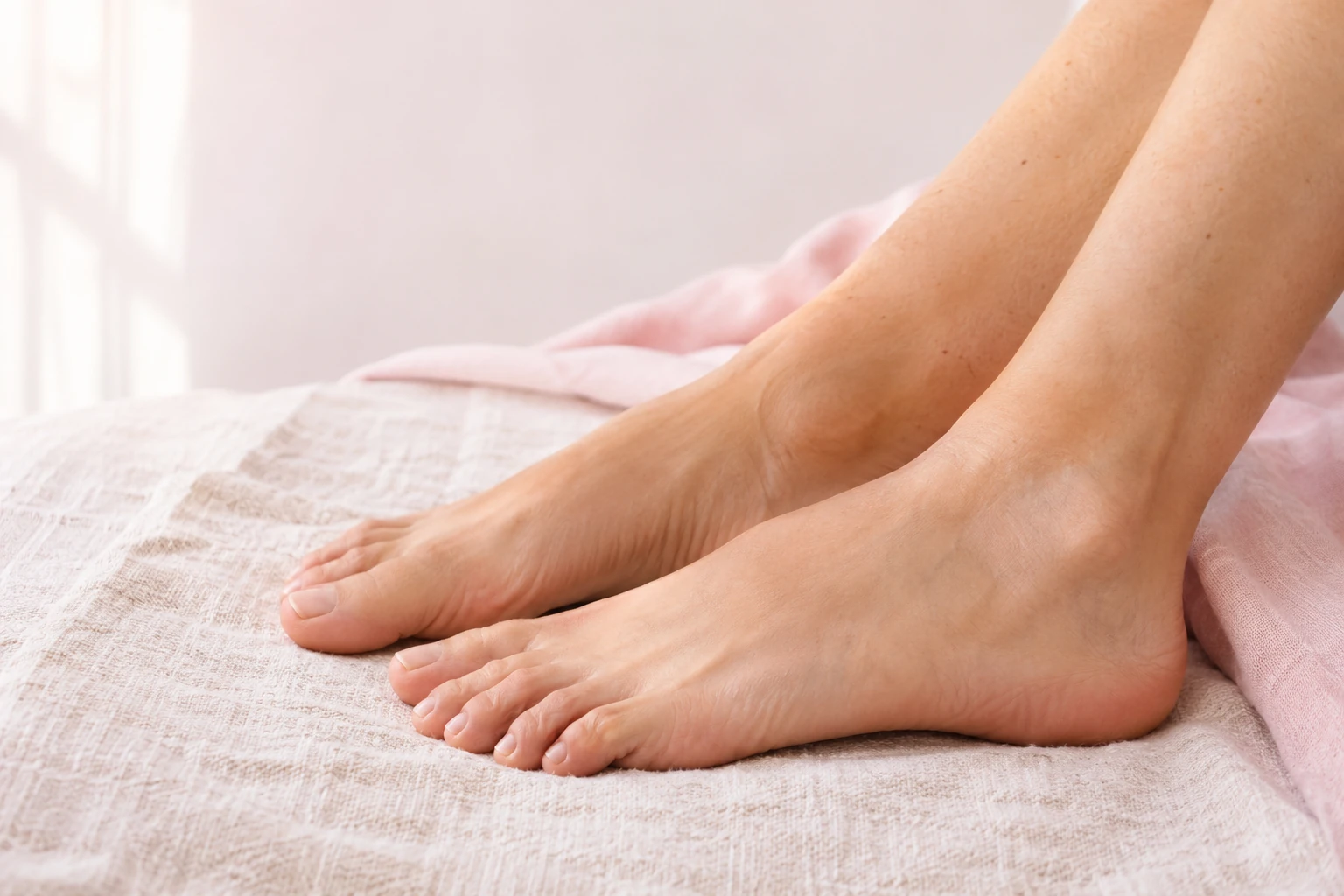
Rough feet can be dry and thickened at the same time.
Blackheads, inflamed spots and deep nodules describe different skin changes.
Skin feels tight after washing, a cream feels comfortable, and product labels mention “dry”, “dehydrated” or “moisture-depleted” skin.
 Mary4BeautySTUDIO NEWS FROM FELLBACH
Latest offers, special treatments and selected skincare tips – personally from Maria.
By signing up, you’ll receive our studio news by email. Unsubscribe at any time. Privacy policy