
Quick results sound tempting — but no one wants unnecessary redness, skin discomfort or to pay for a treatment that ultimately takes them in the wrong direction. That is exactly why skin analysis is so useful before device-based treatments: it helps make sense of what in the mirror may simply look like skin that is “a bit dry”, “unsettled” or “dull”.
Once it is clear what is actually visible (and what may simply be a day-to-day fluctuation), goals become more realistic, the method easier to understand and aftercare much easier to plan. It also becomes clearer why many modern facial treatments do not start with a guess, but with a careful assessment.
Skin Analysis Before Treatment: What It Clarifies — and Why That Matters

With device-based cosmetology, attention can quickly go straight to the equipment: radiofrequency, ultrasound, Aquafacial or Microneedling. What matters, though, is what the skin looks like at the outset. Skin analysis translates subjective impressions (“dry”, “shiny”, “irritated”) into features that are easier to assess — and compare reliably later.
A visual check alone can help, but it can also be quickly skewed by lighting, make-up, current skincare or acute irritation. Technical systems, often described as VISIA-like image analysis, Skinscope or Face-Mapping, reduce this “chance factor”. Instead of broad labels, they bring more specific features into focus: surface texture, pores and sebum shine, redness, uneven pigmentation, texture irregularities and fine lines.
Documentation matters too. Before-and-after results are then assessed through consistent observations rather than “by feel” alone. This helps keep expectations grounded, especially around statements such as “visible straight away” or “always painful”.
The conversation often brings up contextual factors too (stress, sleep, diet, medication, allergies and environment). This is not a diagnosis, but it can help explain fluctuations — and clarify why a modern facial treatment usually starts with a clear picture: What can we actually see now, and what could later be recognised as a change?
From Data to Decisions: How to Choose the Right Device-Based Treatment
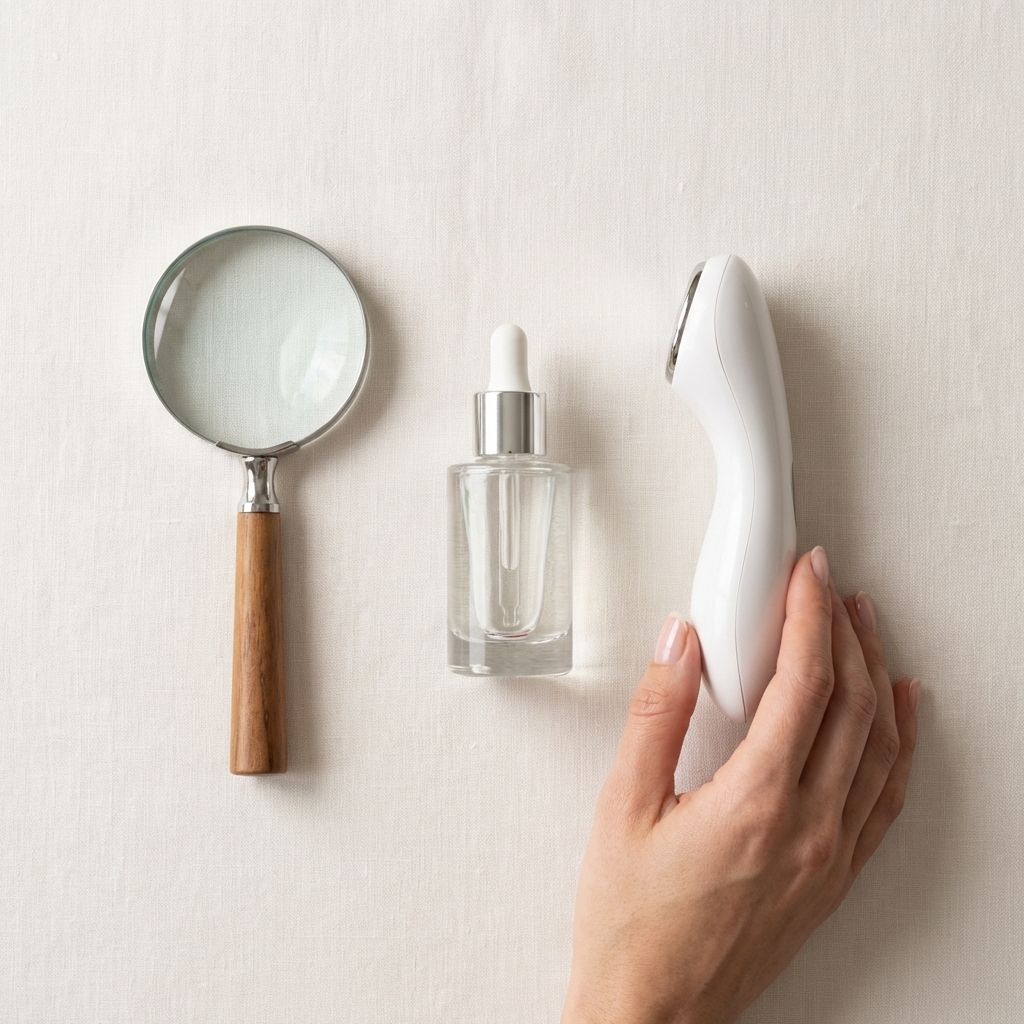
Many modern facial treatments can look like a “device menu”: radiofrequency, ultrasound, Aquafacial, microdermabrasion, Microneedling. But the difference often lies less in the label and more in which skin features matter in a particular case — and how reliably they were recorded in the first place.
Technical skin analysis systems used in studios, such as VISIA, Skinscope or Face-Mapping, use camera and lighting technology and present results as measurements or image assessments. They can reveal things that are easy to miss in everyday life, such as subtle texture irregularities or an uneven distribution of sebum and moisture. This objectivity makes recommendations easier to understand.
Typical features captured by many systems: - Skin moisture and lipid balance, or signs of dryness - Sebum/oiliness and tendency towards congestion (for example, pore appearance) - Texture (roughness, unevenness), fine lines and structural lines - Pigmentation pattern and evenness of complexion - The appearance of elasticity and firmness as an observed pattern
The logic is straightforward: methods focused mainly on cleansing and smoothing are assessed differently from treatments aimed more at firmness, “glow” or a more even complexion. It also helps correct common misconceptions: device-based skincare is not automatically “harsh” or only about anti-ageing — in practice, the choice depends on skin condition, sensitivity and the desired outcome.
Mini check: Is the main goal clear (cleansing/smoothing, freshness/complexion or firmness)? Is it clear what may be visible in the short term — and what is better understood as a process over time?
Device-based cosmetology can achieve a lot — but an individual skin analysis is what turns it into a modern facial treatment that truly suits your skin. It helps set realistic goals, put expectations in context and make results easier to understand.
If you would like to find out which device-based facial treatment suits your current skin condition, a skin analysis can be a good next step. Mary4Beauty offers individual skin analyses and tailored device-based facial treatments, including advice on the process, comfort and aftercare.
When hygiene and the handling of single-use materials are transparent, and aftercare is considered from the outset, a simple “choice of device” becomes a calm, personal plan — without unnecessary surprises.