
“With collagen”, “detox”, “boosts the immune system”: promises on products for skin, hair and wellbeing often sound remarkably plausible. The problem is that many of these ingredient claims turn out to be more like appealing wording than properly substantiated statements.
With a quick reality check you can work out what is a clearly defined nutrition claim, what is an authorized EU health claim—and where marketing leaves plenty of room for interpretation.
EU health claim or advertising slogan? How to tell the difference
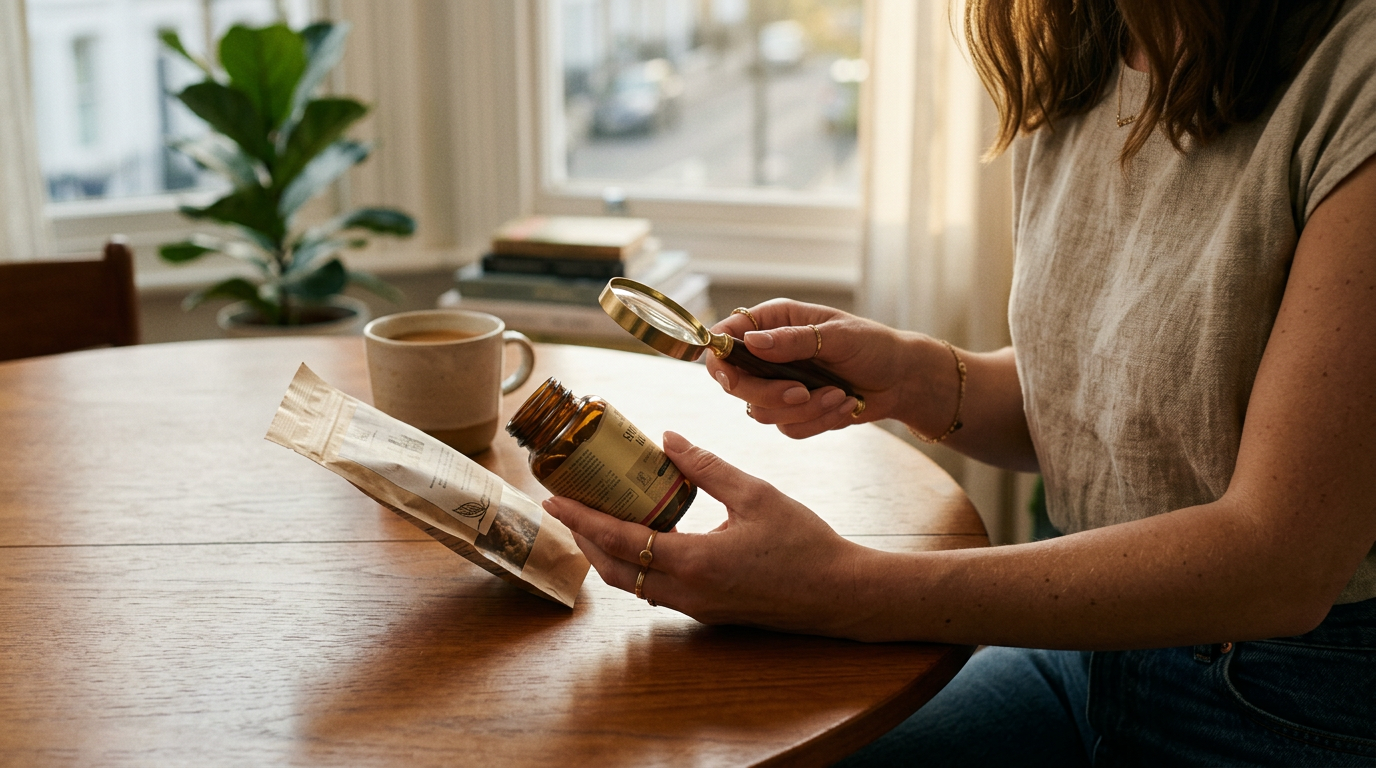
Many ingredient claims read like “facts”. In the EU, however, a phrase that sounds healthy is not automatically permitted or substantiated. In everyday life, it helps to sort them roughly into three groups: nutrition claims, health claims and pure advertising language.
1) Nutrition claims: “What does it contain?”
These are statements about composition, such as “sugar-free”, “low fat” or “source of fibre”. They sound factual, but are tied to set criteria. Important: they tell you about one nutritional aspect, not necessarily whether the product is “better” overall.
2) Health claims: “What is it supposed to do in the body?”
These refer to a bodily function, for example “contributes to the normal function of the immune system”. In general, EU health claims require authorization: they are scientifically assessed (including by EFSA) and may only be used in the approved wording. If you want to understand what “assessed” means, a short reality check on studies and effects may also help. The EU register lists authorized and rejected claims, together with their conditions.
3) Advertising language: “How should it make you feel?”
Words such as “detox”, “glow boost”, “clean”, “superfood” or “naturally healthy” are often deliberately vague. They are meant to create an impression, but without a specific, authorized claim they do not automatically prove an effect.
Keep in mind: What matters less is how convincing a sentence sounds and more whether it is a clearly defined nutrition claim or correctly worded as an authorized EU health claim. Everything in between remains open to interpretation. Claims that sound like curing or treating illnesses are especially sensitive and do not belong in ordinary food and supplement advertising.
7-point label checklist: a reality check in under 2 minutes

Ingredient claims often shortcut your gut reaction: “Sounds good, so it must work.” A quick check brings some structure without making you wade through small print for ages.
7 things you can check right there on the shelf:
1) What kind of claim is it?
A nutrition claim (“sugar-free”) or a health claim (“contributes to …”)?
Result: You know whether it is about composition or an effect.
2) Is the claim specific or vague?
Measurable/defined versus a buzzword (“detox”, “clean”).
Result: Vague words lose their veneer of “proof”.
3) Does the wording sound like an EU claim?
Many health claims use fairly standardized wording.
Result: Advertising language stands out more quickly.
4) Are there conditions or notes?
The small print sometimes explains the conditions under which a claim applies.
Result: You can see whether the claim comes with conditions.
5) What does the claim actually refer to?
The whole product or just one added ingredient (“with vitamin X”)?
Result: The “halo effect” becomes less convincing.
6) Does the front-of-pack message match the ingredients/nutrition table?
The required information gives you context for the big headline.
Result: Contradictions between the slogan and the composition become visible.
7) Does it edge towards a medical promise?
If it sounds like it “treats”, “cures” or “works against” something, that is a warning sign.
Result: You can spot claims that may be especially problematic.
Quick quiz (2 questions):
- Could you restate the claim as a measurable property?
- Would the sentence still say something concrete without words like “detox” or “glow”?
Troubleshooting: If all that remains after the check is a good feeling, but no clear statement, that is often the point: it is more marketing than evidence.
A clear view of ingredient claims makes shopping less stressful: nutrition claims are clearly defined facts, EU health claims are strictly regulated, and much of what sounds like an “effect” is mainly marketing unless it uses an authorized wording.
When choosing products for beauty and wellbeing, it usually helps to treat buzzwords as a prompt to look closer—not as proof. And if you are unsure, the EU register offers a usefully impartial cross-check.
If you would rather do less guesswork with products and routines, an outside perspective can help: at Mary4Beauty, you can find beauty treatments and personal advice on skincare routines and suitable products, tailored to your wellbeing and goals.
If you would like to discuss this calmly, you can book an appointment and bring your questions (for example, about claims, ingredients or your routine).