Needling can improve the appearance of the skin—but not every skin tolerates every intensity easily. If your skin reddens quickly or reacts easily, the usual questions come up straight away: Will it hurt? How long will the redness last? And what aftercare is actually useful?
A simple framework makes “needling strategies by skin goal and sensitivity” easier to plan without overwhelming you, even if you are only just considering cosmetic microneedling as an option: define your goal, assess your skin’s reactivity realistically and choose a suitable method so the result and how your skin feels afterwards fit together.
Step by Step: Match Your Skin Goal, Reaction and Method

In practice, “needling strategies by skin goal and sensitivity” rarely come down to needle length alone. Three factors usually work together: your skin goal, how quickly your skin reacts and the type of needling (roller, pen or nano-needling as a very superficial option).
1) Set your skin goal in one sentence (e.g. smoother texture, finer-looking pores, more even tone). This gives you a clear direction—but it still does not promise how quickly or how much change you will see.
2) Assess your sensitivity honestly: quick redness, stinging, tightness or frequent irritation are common signs. The deeper the stimulus, the higher the irritation potential often is—and therefore the greater the risk that redness and irritation will overshadow your goal.
3) Choose a suitable method: many people find rollers “simple”, while pens are more often perceived as even and precise. Nano-needling is generally considered closer to the surface and is often associated with lower intensity and serum absorption.
4) Put the numbers in context rather than chasing them: many overviews suggest shorter needle lengths for sensitive skin (e.g. 0.25–0.5 mm). The reasoning matters more than the number: greater depth does not automatically mean better results. For calmer aftercare, a simple guide such as Microneedling Aftercare: Keeping Skin Calm During the First 7 Days may help.
Common misconceptions - “Deeper is always better”: too much intensity can also hold back results. - “One size suits every goal”: skin goals and reactions are not interchangeable. - “Home needling fully replaces professional treatment”: technique, hygiene and skin condition all matter. - “Hyaluronic acid cream works like an injection”: the same term, a different effect.
Mini quiz (self-check) 1) Is your main goal more about “texture/smoothness” or “tone/spots”? 2) Does your skin often stay red for a long time after irritation, or does it calm down quickly?
Goal-Based Mini Checklists: Anti-Ageing, Blemishes, Scars and Pigmentation—with Extra Attention to Sensitive Skin

In everyday practice, it usually comes down to the same balancing act: enough stimulus for a visible change, without overwhelming the skin. These mini checklists help you stay on course.
Anti-ageing / texture - Goal: firmer, smoother-looking skin; “collagen production” is often cited as the mechanism. - If your skin is sensitive: gentler options are preferable; shorter needle lengths (e.g. 0.25–0.5 mm) or nano-needling are often mentioned. - Aftercare approach: soothing and simple; hyaluronic acid is often described as barrier-friendly.
Pores / blemishes - Goal: a more even surface; the key is balancing “clarifying” with low irritation. - Pitfall: “deeper is better” particularly often leads to unnecessary irritation here.
Scars / uneven texture - Perspective: several appointments over a longer period are often expected, rather than an immediate effect. - Method: roller versus pen is often discussed in terms of precision and irritation.
Pigmentation / “spots” - Goal: a more even tone; the interplay of needling, active ingredients (e.g. vitamin C) and UV exposure is often emphasised. - Common risk narrative: irritation plus sun exposure is linked to later darkening.
Sensitive skin as the common thread - A pattern across many sources is “less often, gentler, simpler” (longer intervals, lower intensity and fewer irritating steps at once). - Sun protection is often considered a factor in the result because UV strongly affects signs of ageing, spots and redness. - A classic overload combination: strong acid treatments and retinoids used close together with needling.
Troubleshooting (when it starts to feel like “too much”) If the skin keeps burning, feeling tight or looking noticeably red for a long time, the answer is usually not more intensity but a calmer plan with fewer simultaneous irritants.
A suitable needling strategy should feel appropriate, not maximal. When your skin goal, reactivity and method fit together, planning becomes much simpler—even for sensitive skin. More depth is rarely the decisive factor; consistency, a calm approach and simple aftercare often matter more.
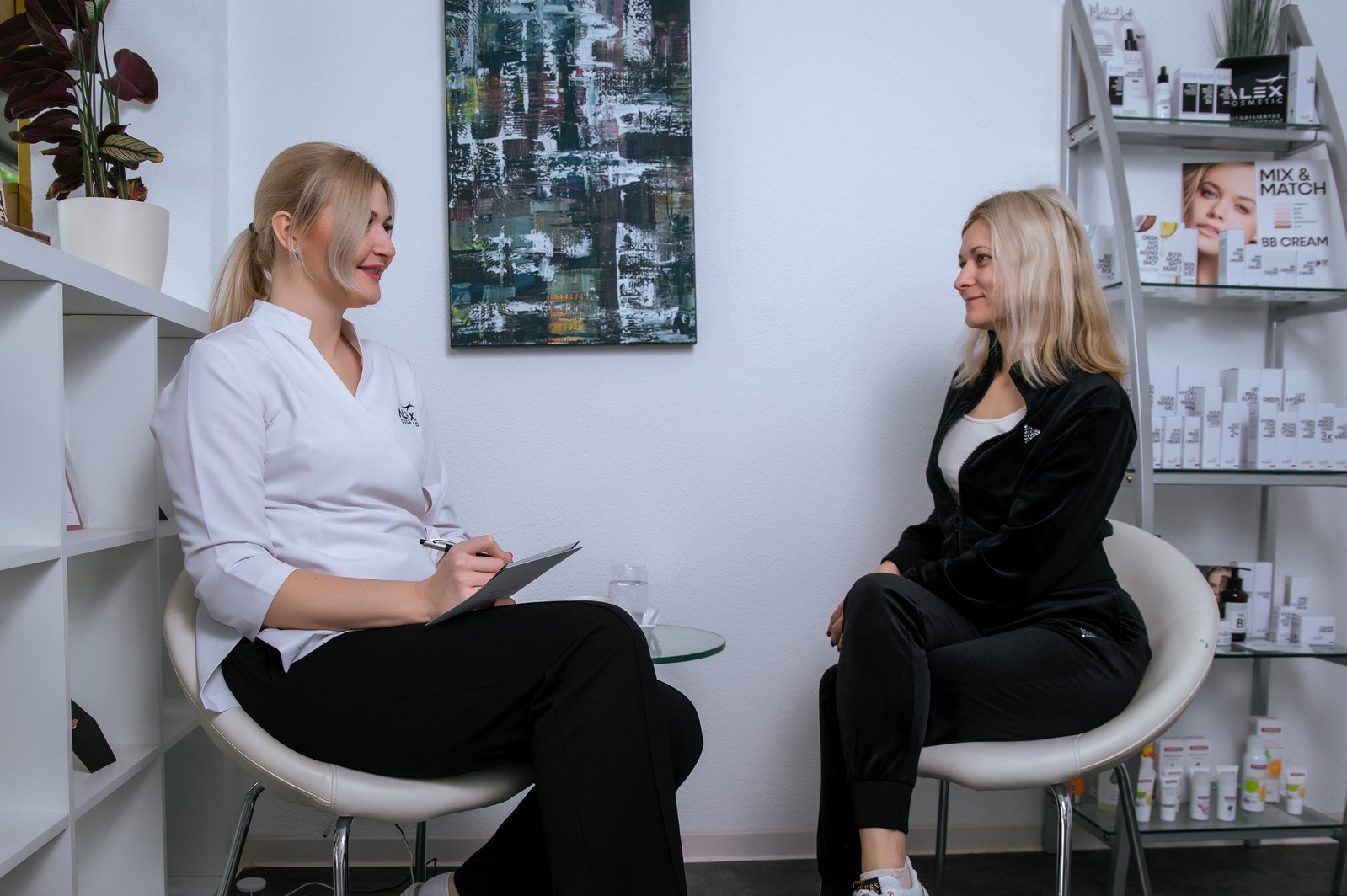
If you tend to react strongly or feel unsure, having the intensity assessed by a professional beforehand can save you a lot of stress. At our studio, we combine individual consultations with cosmetic needling treatments, hygienic practice, careful intensity selection and clear, easy-to-understand aftercare guidance. Microneedling with an acid peel is a separate combination option and should not be chosen for sensitive skin without an individual assessment.
If you want to plan needling without guesswork, a short consultation is often the most relaxed next step—so the intensity, aftercare and downtime fit your skin goal and sensitivity.