
Retinol, vitamin C and AHA/BHA can visibly benefit the skin. But if you “stack” them too close together, your skin may respond with dryness, a warm feeling or stinging. Often it is not one product on its own that causes a problem, but simply too much activity at once.
A clear separation between morning and evening, with planned breaks, often makes the routine feel much calmer—and helps you notice sooner what really suits your skin.
Morning versus evening: a simple order for calmer skin
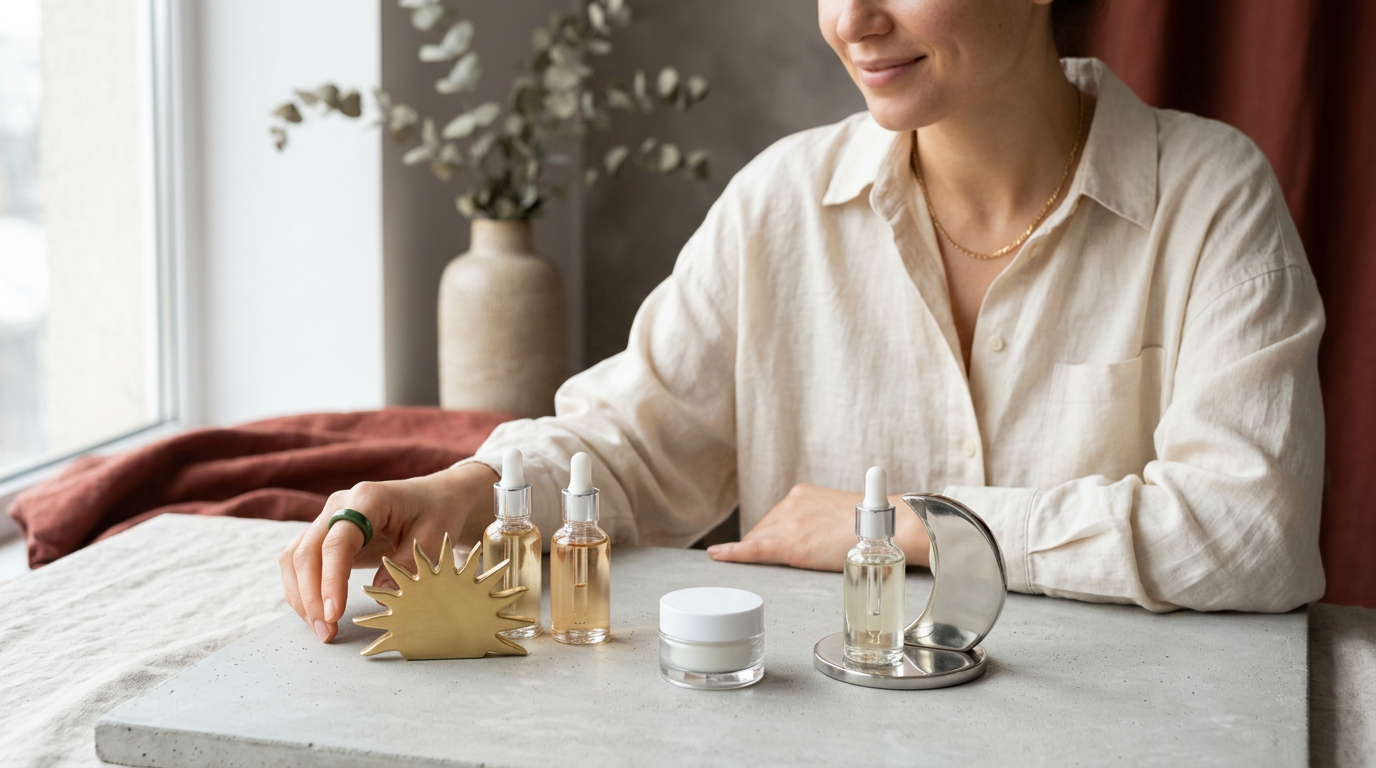
When several potent ingredients are part of one routine, irritation often comes from the overall load: different formulas, different effects and too little of a “buffer”. That is why many people find it helpful to separate products by time of day rather than mixing everything into one layer.
Prerequisites (the basics): gentle cleansing, a simple moisturizer and daily sun protection. If your skin tends to react quickly, a treatment for sensitive skin may also be a calm, barrier-friendly option.
Morning (protection and stability) 1) Cleanse. Result: the skin is free of residue. 2) Vitamin C straight afterwards. Why: it is often used as an antioxidant companion for the day. 3) Moisture + cream (e.g. hyaluronic acid + a simple cream). Why: this may ease feelings of dryness. 4) SPF as the final step. Why: daytime protection is especially relevant if you use retinol in the evening.
Evening (focus on active ingredients) 5) Use retinol on separate evenings. Result: less overlap with other active products.
Quick check: Does it sting as soon as you apply it—or does your skin feel noticeably tight the next morning? Then the routine may be too “active” overall.
Acids and retinol: alternate them—and quick help if irritation occurs

With AHA/BHA acids and retinol, the issue is less about layering order and more about timing. Both are considered “active” parts of a routine: acids for their exfoliating effects and retinol for processes often associated with cell renewal. If they are used too close together, irritation can increase—not because the products necessarily “neutralize” each other, but because the skin barrier has more to cope with.
A beginner-friendly rhythm (simple but effective): 1) Use retinol and acids on separate evenings. Result: less cumulative stress. 2) Build up slowly. Why: increasing too quickly is a common pitfall. 3) Plan recovery evenings. Result: more time for stability. 4) Use a buffer: hydrating basics (e.g. hyaluronic acid + cream; niacinamide is also often mentioned). Why: the routine can feel “softer”.
Common mistakes: introducing several new products at once, increasing use too quickly, skipping SPF during the day.
Troubleshooting (briefly): If redness, stinging or a lasting feeling of heat occurs, the usual advice is to reduce the routine and focus on basic skincare first; for severe or unusual reactions, professional assessment is advisable. If you need a clear plan, the 48-hour plan after irritation can also serve as a guide.
Mini quiz: - Does your skin feel supple and calm, or tight and quick to redden? - Have you introduced many new products lately—or made just one clear change?
A calmer routine usually comes from spacing things out and taking your time: for many people, vitamin C fits well in the morning and retinol better in the evening. Acids often feel most comfortable when they are used in rotation instead of simply layered “on top”.
If you want to build a gentler routine, it can help to save the plan and follow it steadily for a few weeks. If you are unsure which steps suit your skin, you can also book an appointment for an individual assessment: book an appointment here.
If you increase gradually and allow breaks with basic skincare, your skin barrier is more likely to remain stable—and you can tell sooner which combinations you tolerate well.