When your skin feels different during pregnancy, even familiar cosmetics can suddenly raise questions. Some products remain straightforward to use, while others may suddenly feel too active, too strongly fragranced or simply less clear.
A calm way to check products can help you assess them by their use, how your skin feels and their ingredients. This can bring more confidence to your routine and to conversations before a beauty treatment.
Start by assessing the product type, skin condition and ingredients of concern
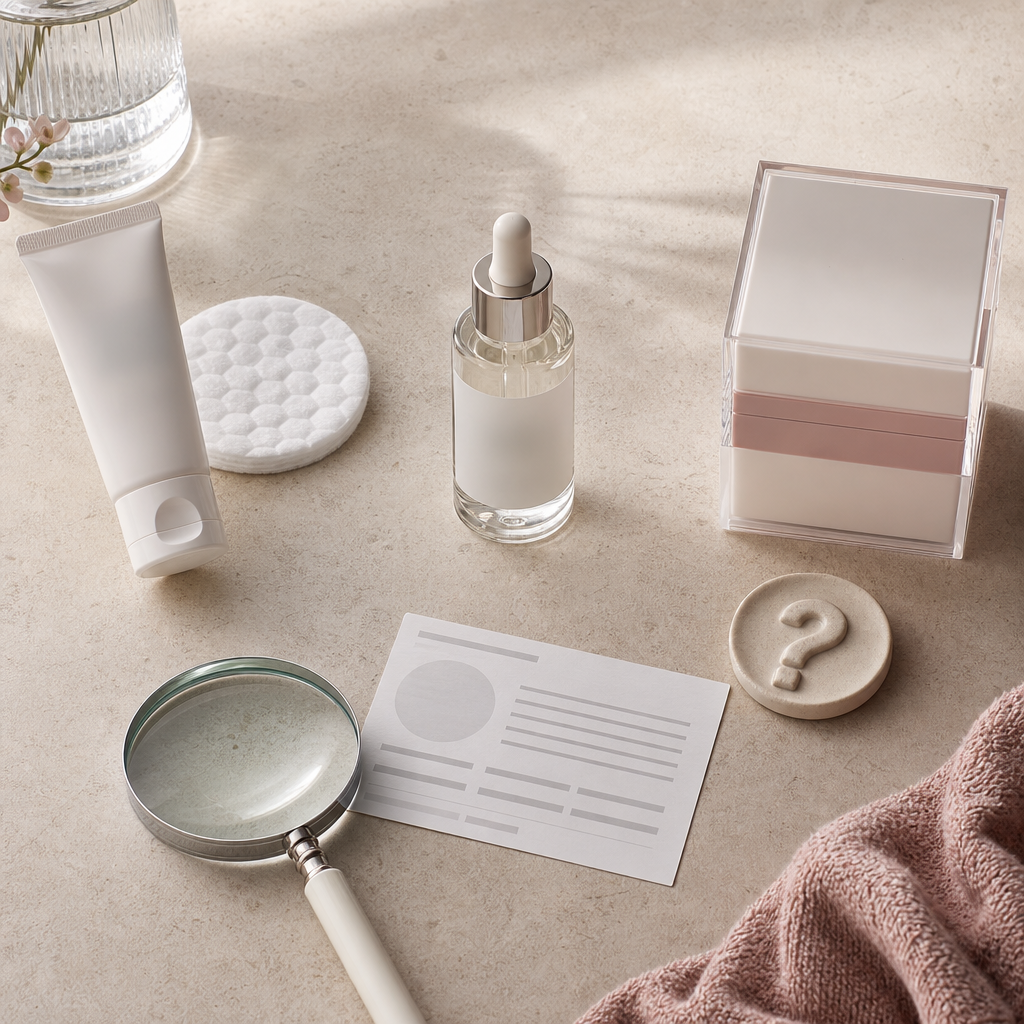
A calm way to assess cosmetics during pregnancy does not start with fearing every jar. It is more useful to look at three things: the type of product, your current skin condition and ingredients that are often discussed during this stage. A simple moisturizer is assessed differently from a highly active serum, an exfoliant or a product for a specific skin concern.
The product type matters because products stay on the skin for different lengths of time. Cleansers are usually rinsed off. Creams, serums and body oils stay on longer. Makeup, nail polish, hair dye and sunscreen each have their own purposes and ingredient groups. This avoids blanket conclusions such as “everything is unsafe” or “natural cosmetics are automatically harmless”.
Your skin also changes how a product feels. During pregnancy, skin may feel drier, more sensitive or more reactive. That is not automatically a warning sign. It only means that tolerability matters more than habit. A familiar product may suddenly feel uncomfortable, while mild basic skincare remains a reassuring reference point for many.
With ingredients of concern, the goal is attention, not panic. Retinoids, certain acids, phthalates, formaldehyde, triclosan, parabens or arbutin are among those often mentioned. Seeing these terms is a reason to look more closely. Certifications such as Ecocert or Cosmos can help, but do not replace an individual assessment; the article on signals of trust in cosmetics can provide further guidance.
Then decide: continue, simplify, pause or ask a specific question
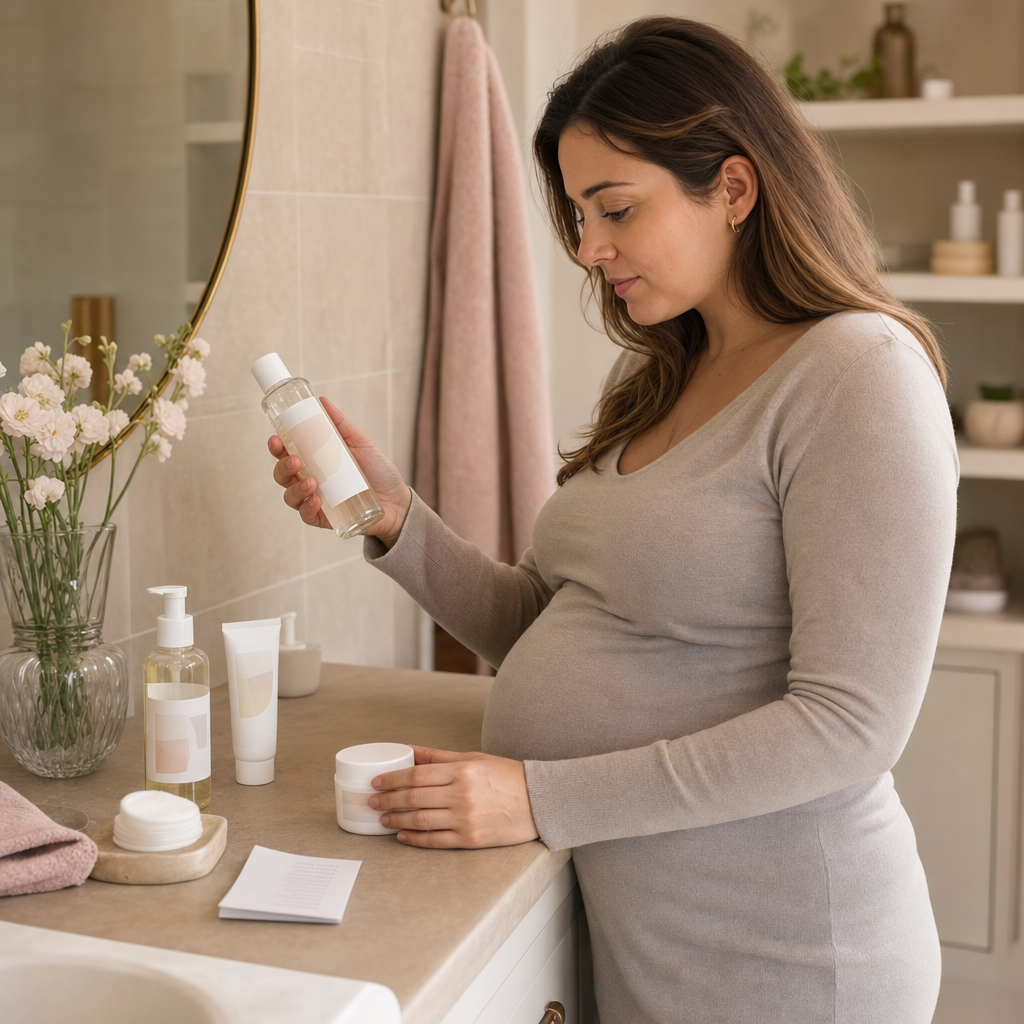
After this initial check, not every product needs a firm yes or no. A more practical approach is to choose among four options: continue, simplify, pause or ask a specific question. This takes pressure out of the decision because a label does not have to be read as a risk straight away.
Continuing may be suitable for familiar products that have been well tolerated and serve a simple purpose: cleansing, moisturizing or caring for the skin. This is not a general promise of safety. It simply distinguishes everyday basic care from products centered on potent active ingredients.
Simplifying may help if your routine has become very full. Many serums, exfoliants and specialty products make it harder to assess how your skin feels, whether you tolerate fragrance or whether irritation is occurring. Using fewer products at a time can make things clearer.
Pausing may make sense when the everyday benefit is small but the uncertainty is greater. This often applies to heavily promoted anti-aging, exfoliating or specialty products, especially those with retinoids, highly active acids or unclear active-ingredient blends. This is not about raising an alarm. It is about recognizing the limits of self-assessment.
Asking a specific question is appropriate when medically worded active ingredients, conflicting information, skin reactions or known sensitivities are involved. “Vegan”, “natural” or “free from” does not automatically resolve the question either. This keeps everyday cosmetics relaxed, gives active skincare a closer look and gives uncertainty a clear place.
Cosmetics during pregnancy become easier to assess when products are not judged in blanket terms. What matters is the product type, how your skin feels, the focus on active ingredients and whether a question needs professional assessment.
A simpler routine can bring calm without putting every product in doubt. For medical questions, a doctor, midwife or pharmacist is the right person to ask; before a beauty treatment, an open conversation beforehand can help. At Mary4Beauty, product choices, skin feel and treatment preferences can be discussed in the context of a beauty studio. If questions remain, it may help to bring along your current routine.