
Sensitive skin often reacts not because of one product, but because many small irritants build up at once. Hot water, fragrances, friction and frequent product changes can put additional strain on the skin barrier.
That is why everyday skincare often benefits from more calm rather than more products. A clear minimal routine makes it easier to see what helps the skin, what tends to irritate it and when professional advice may be useful. The article on a minimalist skincare routine for reactive skin, for example, shows how helpful fewer but reliable steps can be.
Everyday irritants that can put unnecessary strain on sensitive skin
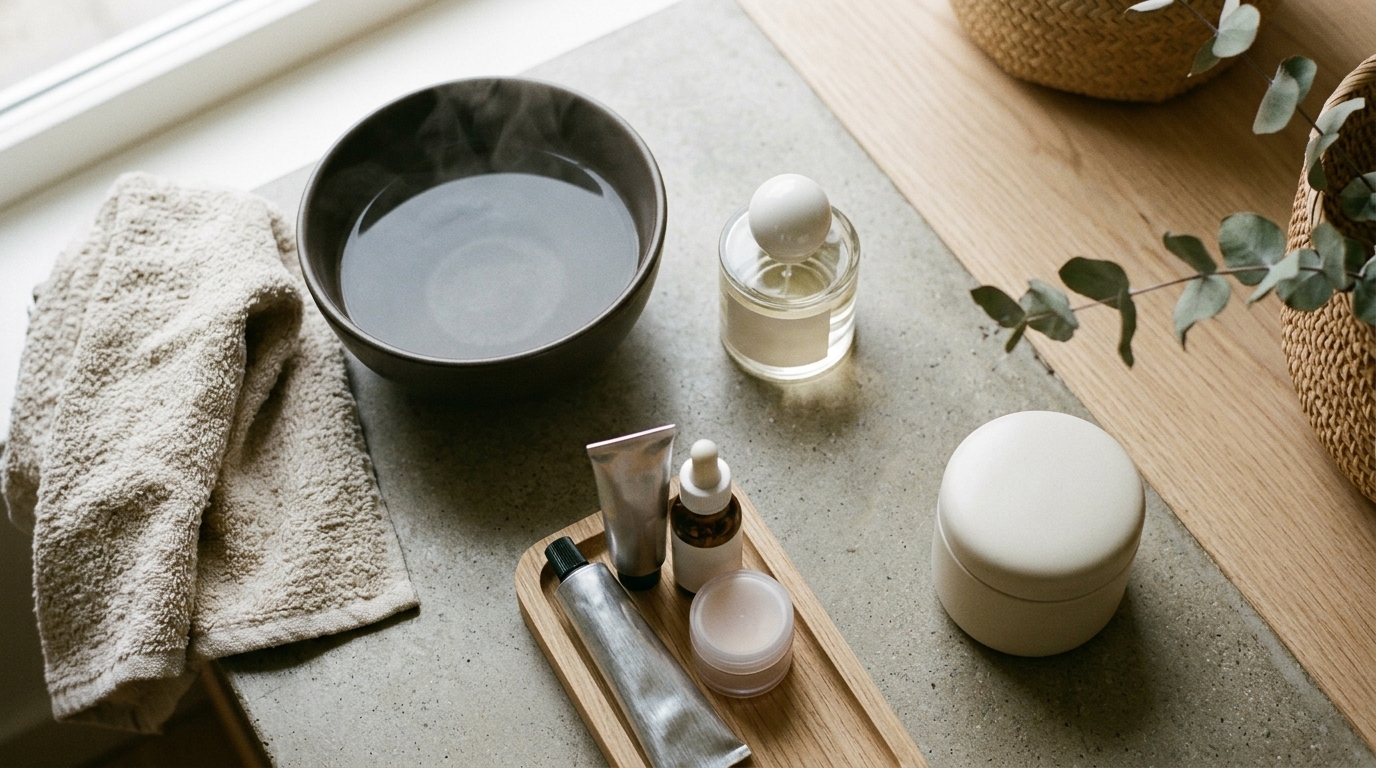
In everyday life, sensitive skin often reacts to the combined effect of many small irritants. These include heat, friction, fragrances and too many skincare products. At first, this may go unnoticed because it happens during ordinary routines: showering, drying off, applying cream or moving between dry indoor heating and cold air.
Very warm water is a common trigger. Excessive heat can dry out the skin more quickly and increase feelings of tightness. Mechanical stress can have a similar effect, for example from rough drying, frequent rubbing or clothing that does not breathe well.
The number of products can also play a part. With sensitive skin, it may not be just one ingredient that causes trouble; it can also be the combination of many formulas. Fragrances, alcohol or highly active skincare ingredients are often mentioned in this context. Reducing irritants does not mean paying less attention, but rather giving the skin barrier a calmer environment.
Dry air, sweat, sudden temperature changes and UV radiation can contribute as well. These factors often occur at the same time. That can make sensitive skin seem unpredictable, even when there is a recurring pattern in the background. If professional support alongside home skincare seems useful, a skin-friendly treatment for sensitive skin may be a suitable addition.
The minimal routine: cleanse gently, soothe and protect every day
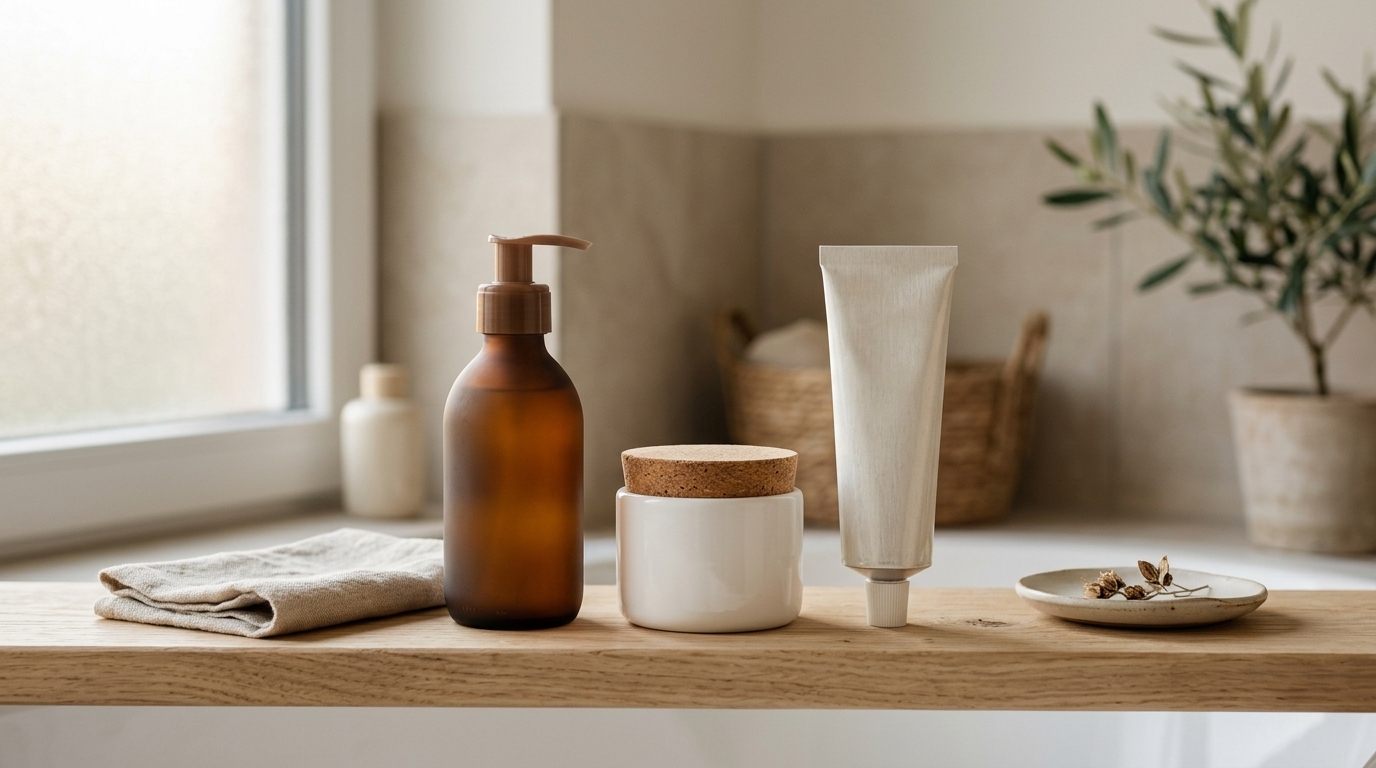
For sensitive skin, what often matters in everyday life is not how many products you use, but whether you can rely on them. A minimal routine reduces friction, fragrance exposure, conflicts between active ingredients and constant switching. Fewer points of contact can also mean fewer opportunities for irritation.
There are usually three simple steps. First: gentle cleansing. It removes residue without making tightness feel worse. Mild formulas and water that is not too hot are often considered a barrier-friendly foundation.
Second: soothe the skin and help it retain moisture. The goal is not to use as many active ingredients as possible, but to choose simple formulas that are well tolerated. Ingredients such as glycerin, hyaluronic acid, ceramides, panthenol or niacinamide are often mentioned in this context.
Third: daily protection. This includes sun protection, because UV radiation can put strain on the skin barrier. A reduced routine is not a quick fix, but it does bring consistency. This usually makes it clearer what calms the skin and what places unnecessary demands on it.
With sensitive skin, a reduced routine can often help more than constantly trying new things. A few well-tolerated steps, mindful handling of heat, friction and fragrances, and some patience over several weeks are what matter.
With more consistency, it is often easier to see which irritants keep recurring in everyday life. If stinging, severe redness or persistent itching continues, professional advice may be useful.
If you are unsure which skincare is right for sensitive skin, a personal consultation can help. Mary4Beauty offers guidance focused on skin-friendly care, well-tolerated routines and a calm, hygienic studio experience.
If you would prefer to discuss the next step individually, you can request a personal consultation and review your routine at your own pace.