
If your skin feels tight or stings, or suddenly looks redder in spring or autumn, you do not need to rebuild your skincare routine straight away. It usually helps to take a calm look at the pattern first: when does your skin react, which products feel different, and what has changed in your everyday life?
This self-check is meant to offer guidance without turning every reaction into a problem. It helps you assess cleansing, moisture and UV protection gently, and see more clearly when symptoms persist or reach a point that needs attention.
Self-check: which signs may point to seasonal skin stress?
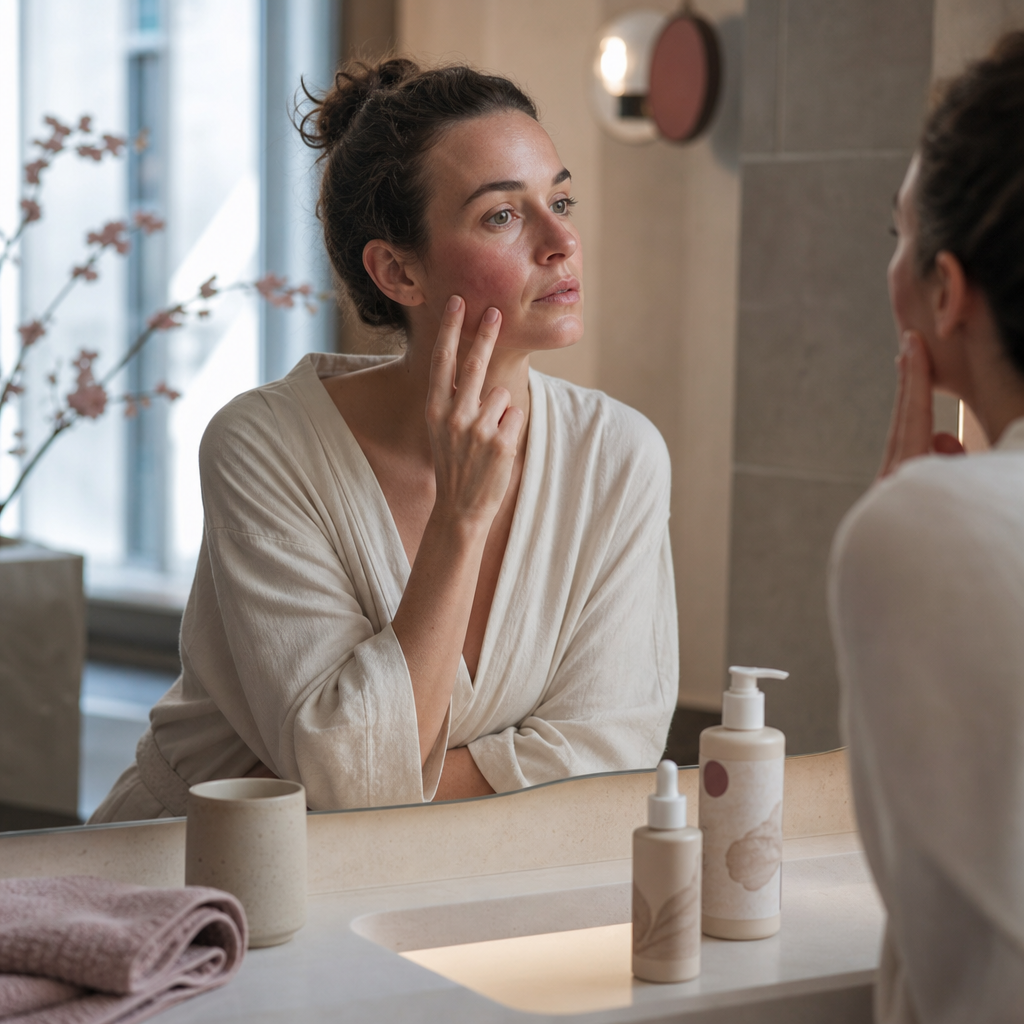
Seasonal skin stress rarely shows up as just one sign. More often, it forms a pattern: your skin feels different, reacts faster to familiar products or seems unsettled after the weather changes. In spring and autumn, temperature shifts, wind, dry indoor air, changing humidity, UV radiation and sometimes pollen can all come together. The skin barrier is the skin’s natural protective layer, and these conditions can put it under more strain, especially if your skin is sensitive.
A calm self-check looks at three things: how your skin feels, what you can see and how it reacts. Common observations include:
- Tightness after cleansing or during the day - Dry, rough or slightly flaky patches - Redness that appears more quickly than usual - Stinging or tingling with products you normally tolerate - Itching or an uncomfortable feeling of warmth - More blemishes despite using the same routine - Shiny skin alongside dry patches
One dry patch does not mean your whole routine is wrong. It is more useful to notice whether several signs appear together or your skin remains more sensitive for a number of days. That pattern often helps distinguish a brief reaction to the weather from skin that is under ongoing stress.
The season shapes what you notice, too. In spring, skin may still be dry after cold spells, while sunshine, pollen and lighter textures bring new triggers. In autumn, the shift between cool outdoor air and dry indoor spaces often plays a bigger role.
Trying many new products at once makes it harder to work out what is going on. If symptoms are strong, persistent or unusual, this is no longer just about seasonal skincare adjustments; a professional assessment may be needed. The self-check is not a diagnosis, but it can help you see the situation more clearly.
Checklist: adjust your spring and autumn routine gently
If the self-check suggests skin stress, a simple routine is often easier to assess than a complete reset. Skincare should calm the skin, not give it even more to deal with. Focus on gentle cleansing, suitable moisture and UV protection; if your skin is very sensitive, a treatment for sensitive skin can also provide a calm setting to discuss reactions.
A gentle adjustment might look like this:
1. Keep cleansing mild: afterwards, your skin should feel clean but not tight. 2. Choose moisture to suit your skin: lighter textures may feel more comfortable, while dry patches sometimes need more protection. 3. Keep UV protection in mind: more daylight in spring can put extra demands on the skin. 4. Consider new products one at a time: this makes it easier to see what your skin reacts to. 5. Assess potential irritants carefully: heavily fragranced, alcohol-based or highly active formulas may bother reactive skin more quickly.
A common misconception is that the skin needs something new right away. Sometimes it needs less disruption instead. Skin does not renew overnight; a skin cycle of around 28 days is often cited as a rough guide. Short-term fluctuations therefore do not tell you for sure whether a product suits you.
Two questions can help you sort things out: have tightness, redness or tingling been recurring for several days? Does the reaction get stronger when several new steps are introduced together? If so, a calmer routine may be worth trying before adding more products.
If symptoms remain strong, keep coming back or are connected with known skin conditions, professional advice is a safer next step. The answer may not be more skincare, but a better assessment of what is happening.
Seasonal skin stress is easier to understand when signs are not judged in isolation. The pattern over several days matters: how your skin feels, redness, itching and reactions to new products all belong in the picture. A simple routine with gentle cleansing, moisture and UV protection can make skincare feel calmer. If symptoms persist or seem unusual, a professional assessment may offer reassurance.
If you want to make sense of what you have noticed, the self-check can be a useful preparation for a calm conversation at Mary4Beauty. The studio offers personal guidance on skincare, how your skin feels and possible next steps—clearly, calmly and without exaggerated promises; you can prepare for an appointment at your own pace and discuss your observations calmly.