Active ingredients can make skin look visibly smoother, clearer or plumper. But they can also dry the skin out quickly or cause redness and stinging—especially when several “actives” are used together.
If you choose AHA, BHA, retinol and hyaluronic acid according to your skin type and goal, you can often get a clearer sense of what to expect sooner. Hype matters less than how an ingredient works, how well your skin tolerates it and whether a combination makes sense. When it comes to acids, a separate acid treatment can be a useful point of reference.
AHA, BHA, Retinol, Hyaluronic Acid: What They Do—and When They Make Sense
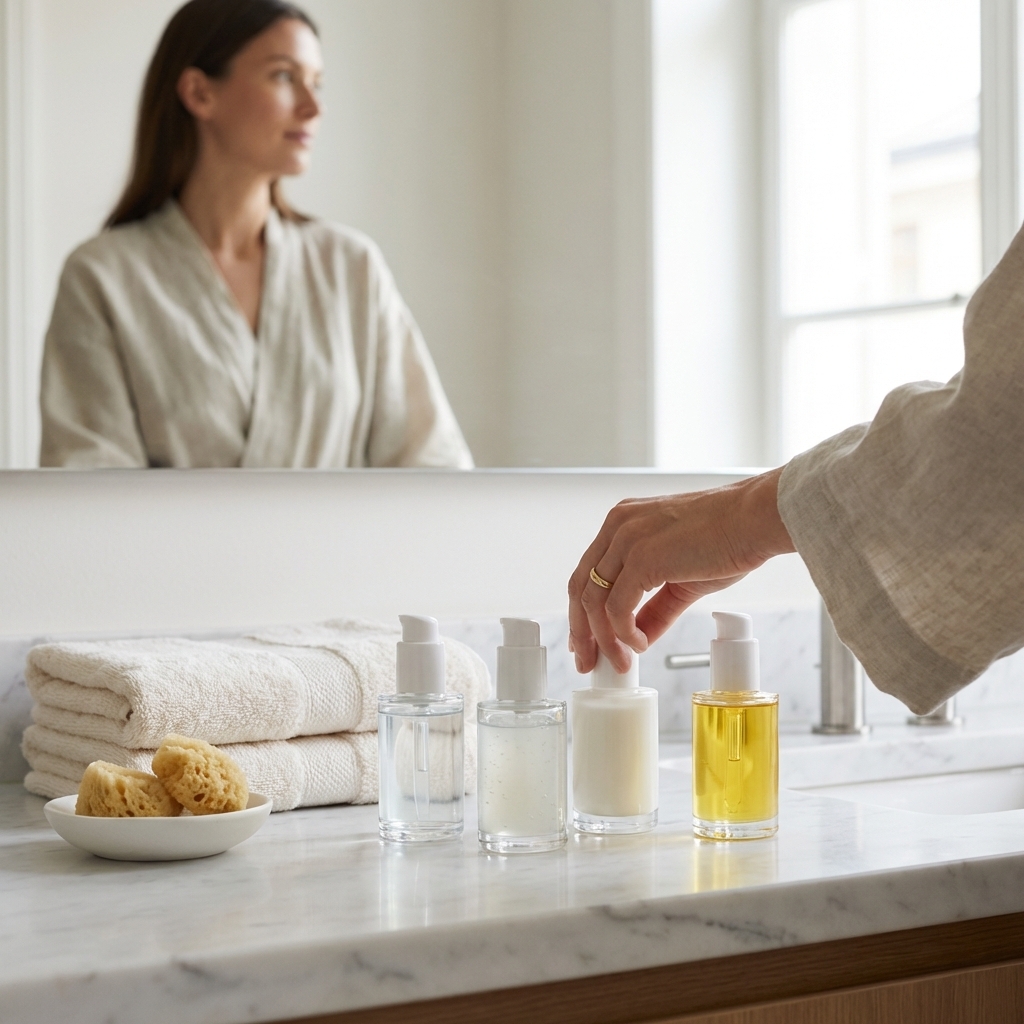
“Active ingredients” can sound like one category, but their effects vary quite a bit. Broadly, these four groups follow four different principles: AHA and BHA exfoliate (they loosen dead skin cells), retinol is often associated with renewal processes, and hyaluronic acid helps hold on to moisture.
AHA (alpha hydroxy acids) are water-soluble and work mainly on the skin’s surface. Many people associate them with a smoother feel and a more even-looking complexion. Common examples include glycolic acid and lactic acid.
BHA (beta hydroxy acids) — usually salicylic acid — is considered oil-soluble. That is why BHA is often associated with pores, sebum and blemishes.
Retinol (a vitamin A derivative) is often mentioned when the goal is to address fine lines, uneven texture or an overall more refined look. It is also known for not being equally well tolerated by every skin type.
Hyaluronic acid does not exfoliate. It binds water and is therefore often described as making skin look “plump” or “well hydrated”—especially as a companion to other, more active products.
Quick guide by goal (not a strict rule): - Glow/rough texture/small uneven areas: more likely AHA - Pores/blemishes/shine: more likely BHA - Lines/texture/“anti-ageing”: often Retinol - Dryness/“plump” effect: hyaluronic acid
Common misconceptions: hyaluronic acid is not a substitute for exfoliation, acids are not all the same, and retinol is not automatically something every skin can comfortably use right away.
Combining Actives Without the Drama: Skin-Type Check, Order and Simple Rules
When AHA, BHA, retinol and hyaluronic acid are used in the same routine, the outcome usually depends on how skin type, strength and texture work together—not on the brand name. Irritation often occurs when several potent products are applied one after another while the skin already feels “out of balance”.
A 6-step skin-type check 1) Notice how your skin feels after washing. If it gets tight quickly, dryness may be a concern. 2) Look at shine and pores. A lot of shine and clogged pores are often associated with oily or blemish-prone skin. 3) Note any redness or stinging with new products. That may point to sensitive skin. 4) Choose one goal. For example, pores or glow—that makes choosing easier. 5) Use “actives” in measured amounts instead of layering them. Acids (AHA/BHA) and retinol are considered relatively potent. 6) Plan to use hyaluronic acid for balance. It is usually described as a moisturising ingredient that pairs well with others.
Order of application—think texture: Light, water-based formulas are often used before richer creams so they can spread easily.
Simple pairing rules that often work: - Use fewer categories at the same time, and choose them deliberately. - Acids and retinol are often described as a combination that can lead to dryness or irritation more quickly. - Hyaluronic acid fits well “in between” in many routines.
Mini-check (2 questions): - Does your skin become red or dry quickly after trying new products? In that case, “less at once” is often the gentler choice. - Is your focus right now pores or fine lines? A clear focus helps avoid purchases that do not work for you.
One point that comes up repeatedly in many conversations: acids and retinol are often associated with increased sensitivity to light. That is why skin protection is often seen as part of a routine that helps make actives easier to tolerate—and for many people, a gentle start with retinol is a more comfortable option than “too much at once”.
Choosing actives that fit your needs makes the whole routine more predictable: AHA and BHA are usually about the skin’s surface or pores, retinol is often linked with texture and “anti-ageing”, and hyaluronic acid mainly supports the feeling of hydration.
A routine with one clear goal works best when it does not overwhelm your skin. If your skin stings quickly or starts to flake, a brief assessment at the studio may help before you combine several active products.
If you are unsure which actives suit your skin or how to combine them sensibly, a short consultation can help you plan a routine that works in everyday life too.
If sensitivity is a major concern right now, a treatment for sensitive skin can also offer a gentler starting point before you try several “actives” at once.