Rough patches, visible pores or a “tired” feeling in the skin can quickly tempt you to use strong peels. It may feel smoother briefly — then come stinging, redness or dryness.
Skin renewal often works better when the skin barrier is allowed to settle first. With a simple, barrier-friendly routine, you can gradually even out texture without overwhelming the skin. If exfoliation is added later, it is often better tolerated. When it suits your skin, one option is a gentle acid treatment.
1) Why “smooth” often starts with the skin barrier
“Skin renewal and texture improvement” are not just about layering on more active ingredients. The surface looks more even above all when the outermost layer renews calmly and evenly.
In brief: during cell renewal, cells move upwards, flatten, lose water more easily and eventually shed. When this shedding happens evenly, skin feels smoother. If the process is disrupted, the texture can quickly look rough or “grainy”.
This is exactly where the skin barrier comes in. Put very simply, it consists of the horny layer, skin-like lipids and moisture-binding components (often called NMF, or “Natural Moisturizing Factor”). When this system gets out of balance, the surface often shows familiar signs:
- Tightness or dryness despite “rich” skincare - Visible flakes and a rough feel - Reactivity: products sting or tingle more quickly - A combination of shine and dryness at the same time
Important: roughness does not automatically mean “not enough exfoliation”. Often the cause is too much friction, scrubbing too frequently or using too many active products. In that case, smoothness is more likely to come from calming the skin, good moisture retention and reliable barrier care.
Remember: calm and hydrate first, then smooth selectively.
Self-check (2 questions): Does skincare often sting for you? Does your skin seem oily and dry at the same time?
2) A barrier-friendly routine: smooth gently without stressing your skin
A barrier-friendly texture routine works best with a clear foundation: gentle cleansing, reliable hydration and protection during the day. Once those are in place, exfoliation can feel like a useful step — rather than a daily fight with your skin.
Prerequisite (quick check): Does your skin usually feel calm after washing? If not, it may be worth simplifying your routine first.
Step 1: Reduce irritation. Fewer products, fewer changes and no rough scrubs. Result: your skin is less likely to react with stinging or redness.
Step 2: Combine moisture and lipids. NMF (natural moisturising factors) often help the skin feel more supple. Ceramides are lipids that sit in the horny layer like “cement” between cells. Result: moisture is often retained better and the surface feels less “dry and rough”.
Step 3: Exfoliate gently and in measured amounts. AHAs are often used for texture, but as a targeted stimulus within a stable routine. If you are unsure, it can help to know which ingredients (AHA, BHA, retinol, hyaluronic acid) suit your skin type. Result: smoother skin without leaving it persistently irritated.
Step 4: Avoid common pitfalls. Increasing too quickly, using several “actives” at once or skipping daytime protection can make the texture look more unsettled.
Troubleshooting: If your skin stings or feels tight, it often helps to return to the basics for a few days.
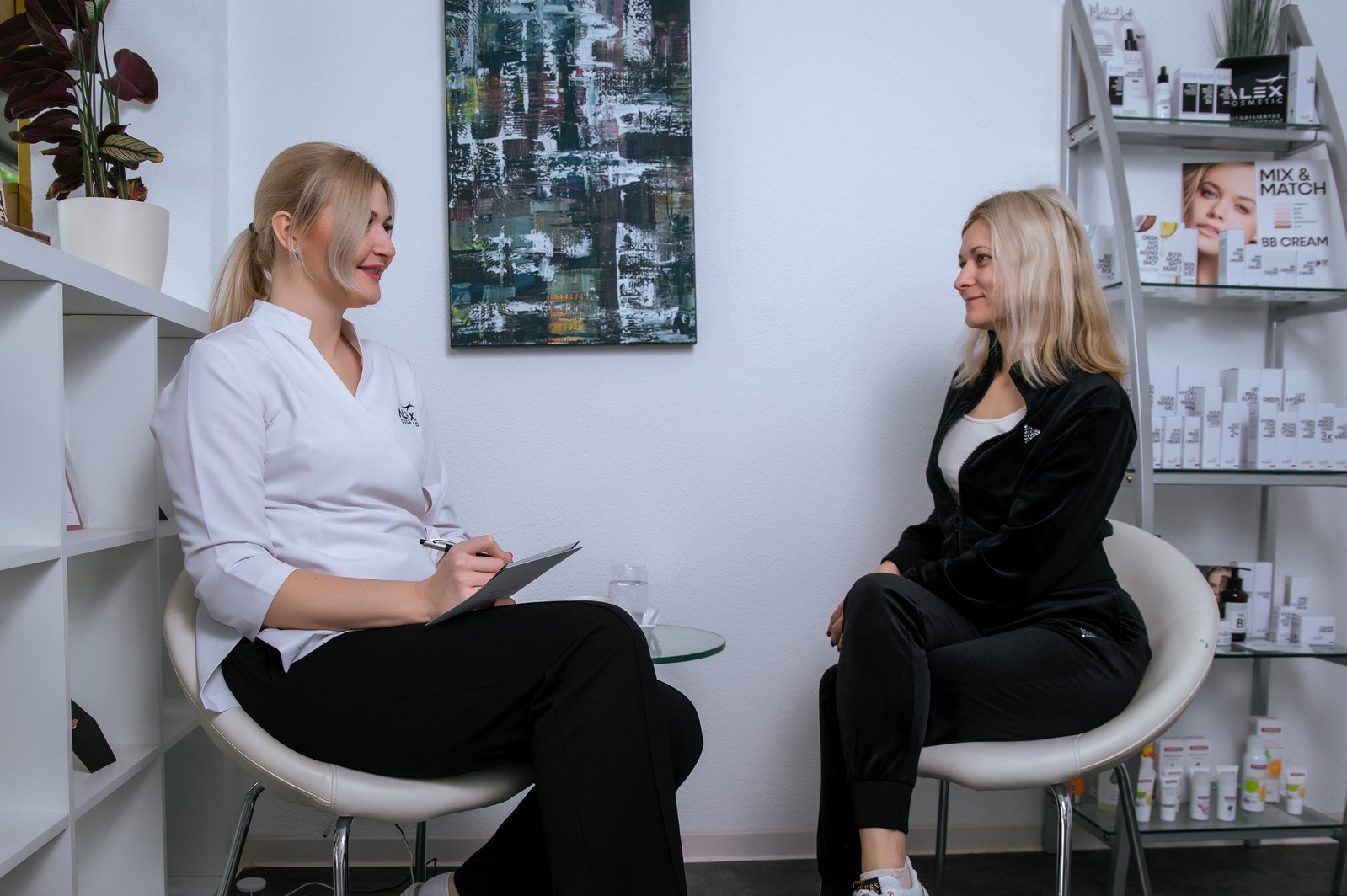
Studio options: At the studio, the focus is on a professional assessment and barrier-oriented skincare plans. After a skin check and before more intensive procedures such as needling are considered, the studio often includes a classic facial treatment.
Mini-check (2 questions): Is your skin generally calmer after about 2 weeks? Does it feel less “tight” after washing?
For skin renewal and texture improvement, “more” is not automatically better. A calm foundation of gentle care, hydration and lipids often makes skin more resilient — and only then can gentle smoothing really feel helpful.
Two signs are often enough as a guide: less stinging in everyday life and less tightness after washing. If you are unsure which type of exfoliation suits your skin, a brief skin analysis at the studio can help you avoid unnecessary experiments.
At Mary4Beauty, we support you with an individual skin analysis and cosmetic advice — focusing on barrier-friendly skincare plans and suitable treatment options if you are looking for a more even skin texture.
If you would like to find out what is really helpful for your skin right now, you can book a short skin analysis. This can help you plan a calm, practical routine without further stressing your skin through over-exfoliation.